Why the Air Force's B-21 Raider Costs $700 Million Per Plane. And Nobody Actually Knows If That's Right
 K. Brennan
The B-21 Raider made its public debut in December 2022, rolling out of a Northrop Grumman hangar in Palmdale like a very expensive secret that was no longer a secret. It's sleek, angular, and genuinely impressive, a flying wing design that looks like someone tried to fold a B-2 Spirit into something even more aerodynamically unsettling. Northrop says it's the most advanced bomber ever built. The Air Force agrees. Congress, mostly, goes along with it.
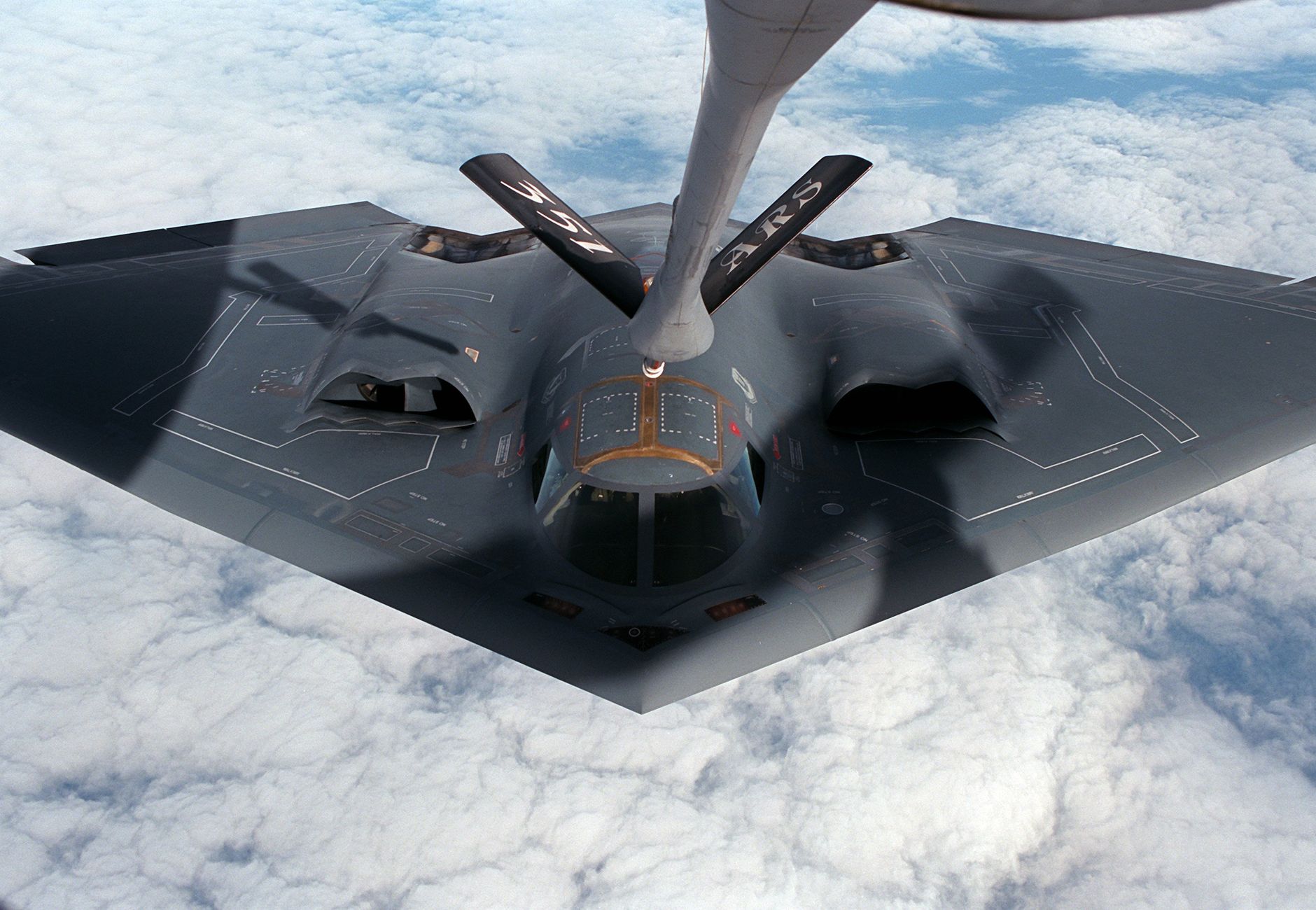 Photo by
 The price? Somewhere around $700 million per aircraft, give or take a few hundred million dollars.
That last part is not a joke.
The Number Everyone Quotes, That Nobody Can Confirm
Here's where it gets weird. The $692 million-per-unit figure cited in most coverage comes from a 2010 estimate, made before the plane was fully designed. The Government Accountability Office has repeatedly flagged that the B-21 program operates under what's politely called a "cost-plus" contract structure with classified unit pricing. Northrop Grumman and the Air Force have agreed, essentially, to not tell you what each plane costs until a sufficient number are built.
This isn't unusual for classified programs. It is, however, deeply convenient when your early prototypes run over budget.
The Air Force wants at least 100 B-21s, possibly up to 145. At $700 million each, that's somewhere between $70 billion and $100 billion for the fleet, before you add sustainment, upgrades, and the inevitable software patches. The B-2 Spirit, for comparison, ended up costing $2.1 billion per aircraft once all was said and done. The Air Force originally planned to buy 132 of those. They bought 21.
See the pattern?
What You're Actually Paying For
To be fair to the Raider, the technology inside it is genuinely different from anything flying today. It was designed from the start to be a "platform" for future upgrades rather than a fixed system, meaning its avionics, sensors, and weapons bays can be swapped out as threats evolve. That's a lesson learned painfully from the B-2, where retrofitting new electronics into an old airframe became an expensive, years-long ordeal.
The B-21 also uses an open systems software approach, which in plain English means: different contractors can write software for it without the whole thing needing to be torn apart. Think of it less like a 1990s mainframe and more like a phone that accepts third-party apps, except the apps are directed-energy weapons and next-generation communications suites.
It's built for contested environments. China's air defense network has expanded dramatically over the past decade; the B-52 can't survive it, and even the B-2 would struggle. The B-21 is designed to fly deep into those environments, undetected, and strike targets the other bombers can't reach. Whether it can actually do that won't be publicly confirmed until it either succeeds or doesn't, probably over the Pacific.
graph TD
    A[B-21 Mission Profile] --> B(Penetrate Contested Airspace)
    B --> C{Detected?}
    C -->|No| D[Strike High-Value Target]
    C -->|Yes| E[Electronic Countermeasures]
    E --> D
    D --> F[Egress and Return]
The Procurement Trap, Again
Six B-21s are currently in flight testing at Edwards Air Force Base. That's actually ahead of where the B-2 program was at a comparable stage, which is worth acknowledging. First flight happened in November 2023, roughly on schedule. These are not small things.
But the GAO's 2024 assessment noted that the program has yet to complete many of its critical design reviews for subsystems, radar, electronic warfare suite, communications. Those reviews will cost money. Some of those subsystems will need redesigns. The redesigns will cause delays. The delays will increase per-unit cost. This is not pessimism; this is just what happens with programs of this complexity.
So: does the Air Force actually need a fleet of stealthy long-range bombers capable of hitting targets inside Chinese or Russian air defense umbrellas? Probably yes. Is the B-21 the right approach? The arguments for it are more credible than they were for, say, the Littoral Combat Ship. Does the current procurement model give taxpayers or oversight bodies any real visibility into whether the money is being spent efficiently?
Not really, no.
At some point, "it's classified" stops being a security posture and starts being a budget management strategy. The Air Force has enough institutional memory to know that buying 100 expensive things rarely ends with 100 expensive things. It usually ends with 40 very expensive things, a program review, and a congressional hearing where everyone acts surprised.
Here's hoping the Raider breaks that streak. The price tag alone demands it.
Get Defense & Donuts in your inbox
New posts delivered directly. No spam.
No spam. Unsubscribe anytime.