Why Ghost Robotics' Robot Dogs Keep Getting Shot at Ranges
 K. Brennan
Ghost Robotics has a problem most defense contractors would envy: their product is too much fun to destroy.
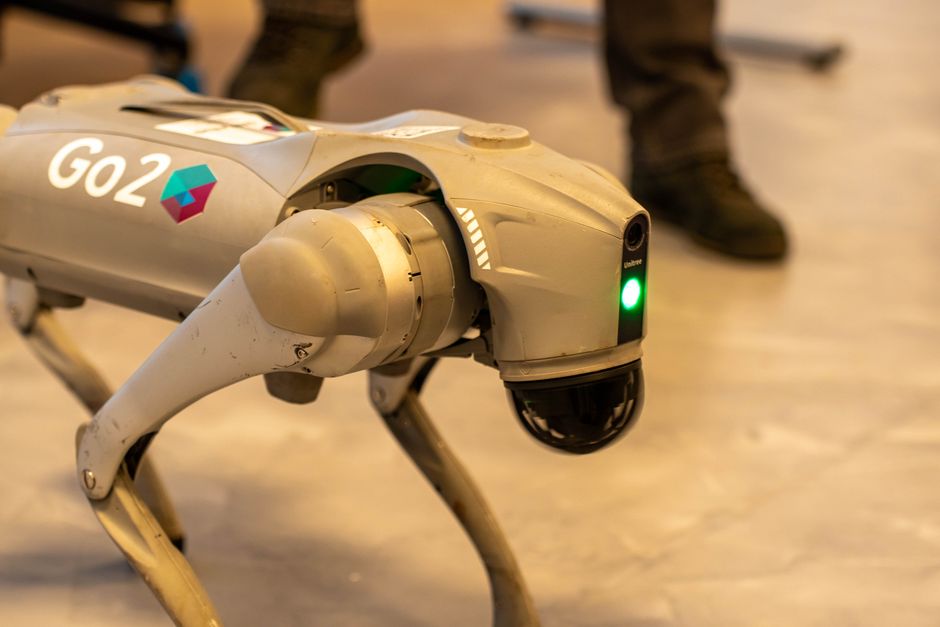
Their Vision 60 quadruped robots were designed for reconnaissance, perimeter security, and dangerous environment operations. Instead? Military units keep turning them into the world's most expensive clay pigeons. What started as a few isolated incidents has become a pattern that's equal parts hilarious and expensive.
The $100,000 Moving Target
Each Vision 60 costs roughly $100,000, not exactly throwaway money, even by Pentagon standards. Yet videos keep surfacing of these robotic dogs getting blasted with everything from standard-issue rifles to.50 caliber rounds. Why?
Because nothing says "realistic training scenario" like a target that actually moves, reacts to terrain, and occasionally falls over in ways that make hardened Marines giggle.
The appeal is obvious. Traditional pop-up targets are predictable. Drones are too fragile and fly away too quickly. But a robot dog? It moves at walking speed, follows programmed routes, and provides that satisfying "Did we just shoot a robot?" feeling that apparently never gets old.
When Features Become Bugs
Ghost Robotics engineered these machines to be resilient. The Vision 60 can recover from falls, navigate rough terrain, and continue operating with minor damage. These survival features make it an irresistible challenge for weapons testing.
"Can it keep walking with a leg shot off?" becomes less of a reliability question and more of a Friday afternoon experiment.
The robot's AI-powered movement patterns add another layer of entertainment. Unlike static targets, the Vision 60 actually tries to complete its mission even while under fire. This creates unexpectedly comedic scenarios: a robot dog limping determinedly toward its waypoint while missing a leg, or continuing to "patrol" in circles after taking damage to its navigation sensors.
The Economics of Robot Target Practice
Here's where military logic gets interesting. Units justify the destruction by calling it "stress testing" or "vulnerability assessment." Fair enough, you do want to know how your $100,000 robot handles hostile fire before deploying it in actual combat zones.
But there's stress testing, and then there's "Let's see what happens when we hit it with a rocket launcher."
The real issue isn't the testing itself. Combat robotics need to prove durability under fire. The problem is that units often skip the "graduated testing" approach. Instead of starting with small arms and working up, they jump straight to "What's the biggest gun we can legally fire at this thing?"
graph TD
    A[Receive Robot Dog] --> B[Initial Training Mission]
    B --> C[Someone Suggests Target Practice]
    C --> D["It's for Science!"]
    D --> E[Escalating Weapons]
    E --> F[Very Expensive Scrap Metal]
    F --> G[Awkward Conversation with Procurement]
Beyond the Humor
Underneath the comedy lies a legitimate military need. Traditional training targets don't prepare soldiers for engaging robotic threats. As adversaries deploy their own military robots, knowing how to effectively neutralize them becomes tactically important.
Ghost Robotics has actually started marketing this angle. Their newer promotional materials emphasize the Vision 60's role in "opposing force" training scenarios. If units are going to shoot at robot dogs anyway, might as well make it official.
The company has also introduced "target practice" configurations, essentially stripped-down versions without the expensive sensors and computing power. Same satisfying robotic movement, fraction of the cost when reduced to spare parts.
The Verdict
Robot dogs getting shot at firing ranges represents something larger: the military's ongoing adjustment to robotic systems. These machines occupy an odd space between equipment and adversary, tool and target.
For now, Ghost Robotics seems content to sell robots for whatever purpose units find useful, even if that purpose involves high-velocity disassembly. After all, a sale is a sale, whether the robot retires peacefully or goes out in a blaze of small-arms fire.
Just maybe don't mention the target practice thing in your next budget justification memo.
Get Defense & Donuts in your inbox
New posts delivered directly. No spam.
No spam. Unsubscribe anytime.