Why the Air Force's $2 Billion NGAD Fighter Might Get Canceled Before It Ever Flies
 K. Brennan
The Air Force has been working on its Next Generation Air Dominance fighter, NGAD, pronounced like the noise you make when you see the price tag, since roughly 2015. A decade of classified development, billions of dollars spent, and the program might get restructured into something barely recognizable before a single production aircraft rolls out of a hangar.
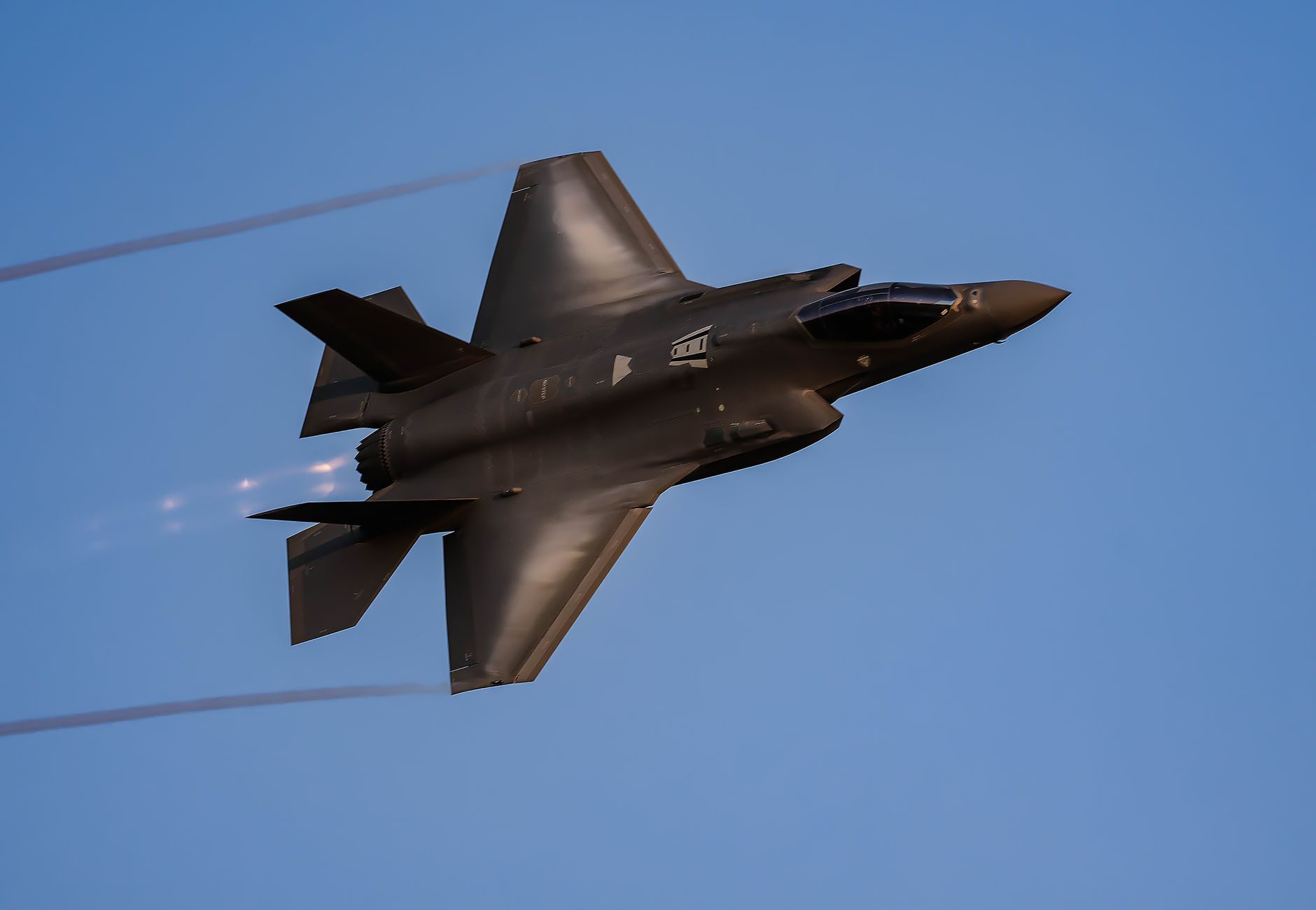 Photo by I Bautista on Pexels.
That's not a leak or a rumor. Former Air Force Secretary Frank Kendall said it publicly in 2024: NGAD's cost per plane had climbed so high that buying enough of them to matter was becoming difficult to justify. His estimate? Somewhere north of $300 million per aircraft, possibly significantly north. For reference, an F-35A costs around $80 million. An F-22, which everyone already considers eye-wateringly expensive, cost about $143 million in 2009 dollars.
So what exactly is NGAD supposed to be, and why is it costing this much?
The Original Sales Pitch
NGAD was conceived as a sixth-generation crewed fighter, the aircraft that would eventually replace the F-22 in high-end air superiority roles. Not a do-everything plane like the F-35. Something purpose-built to survive and fight inside heavily contested airspace: think the South China Sea, the Taiwan Strait, or anywhere the People's Liberation Army Air Force shows up with its own advanced fighters and dense surface-to-air missile coverage.
The requirements that flowed from that mission drove the design somewhere expensive. Extreme stealth. Long range. Pacific distances are not forgiving. The ability to operate as a quarterback for unmanned wingmen (the Collaborative Combat Aircraft program, which has its own drama). Probably some directed-energy capability, though the Air Force won't confirm specifics. Each one of those requirements costs money. Stack them all together and you're not building a car, you're building a bespoke spacecraft that occasionally shoots missiles.
Boeing won the contract for the demonstrator phase. The Air Force flew a prototype, confirmed in 2020 by then-acquisition chief Will Roper, who described it as already having been flown. That's unusual candor for a black program, and it briefly made NGAD feel tangible. Then costs kept climbing, budgets tightened, and the candor stopped.
The Procurement Math Problem
Here's where things get uncomfortable. The Air Force wanted to buy roughly 200 NGADs over the life of the program. At $300 million per copy, and that number could be conservative, you're looking at $60 billion just for the airframes. Add development costs already sunk, sustainment over 30 years, and the associated systems, and the total lifecycle cost becomes the kind of number that makes Senate Armed Services Committee members audibly inhale.
The problem isn't purely financial, either. It's about quantity versus quality in a war the Pentagon is increasingly thinking about in terms of mass. Ukraine changed some assumptions. Cheap, expendable systems have demonstrated real military value against expensive ones. A $300 million fighter is an extraordinarily valuable target, one hypersonic missile or even a lucky surface-to-air engagement and you've just lost the equivalent of a small destroyer.
That tension, exquisite capability vs. affordable mass, is genuinely hard to resolve. Nobody wins by flying three NGAD sorties when they need thirty.
graph TD
    A[NGAD Requirement Set] --> B(Extreme Stealth)
    A --> C(Pacific-Range Fuel Fraction)
    A --> D(CCA Command Integration)
    A --> E(Advanced Sensors)
    B --> F{Cost per Airframe Explodes}
    C --> F
    D --> F
    E --> F
    F --> G[Quantity Unaffordable]
    F --> H[Program Review Triggered]
What Restructuring Actually Means
When the Pentagon says a program is being "restructured," that word is doing a lot of heavy lifting. It can mean descoping requirements. It can mean reducing buy quantities. Sometimes it means stretching the schedule so the annual budget hit looks smaller, even though total cost goes up. Occasionally it means cancellation with better PR.
For NGAD specifically, serious voices in the defense community have floated the idea of splitting the program, keeping a small number of very capable aircraft for the most dangerous missions while leaning harder on cheaper unmanned systems for everything else. That's not unreasonable as a strategy. Whether the Air Force's institutional culture, which has always prized the crewed fighter, will accept it is a different question.
Right now NGAD exists in a strange limbo: too advanced to kill quietly, too expensive to build in meaningful numbers, and too classified to debate properly in public. Billions spent. No production decision. A demonstrator that flew once and then apparently stopped being discussed.
Somewhere, an F-22 pilot is reading this and wondering if their replacement is actually coming. Probably not wrong to wonder.
Get Defense & Donuts in your inbox
New posts delivered directly. No spam.
No spam. Unsubscribe anytime.