Why the Navy's $13 Billion Ford-Class Carriers Still Can't Launch Planes Reliably
 K. Brennan
Why the Navy's $13 Billion Ford-Class Carriers Still Can't Launch Planes Reliably
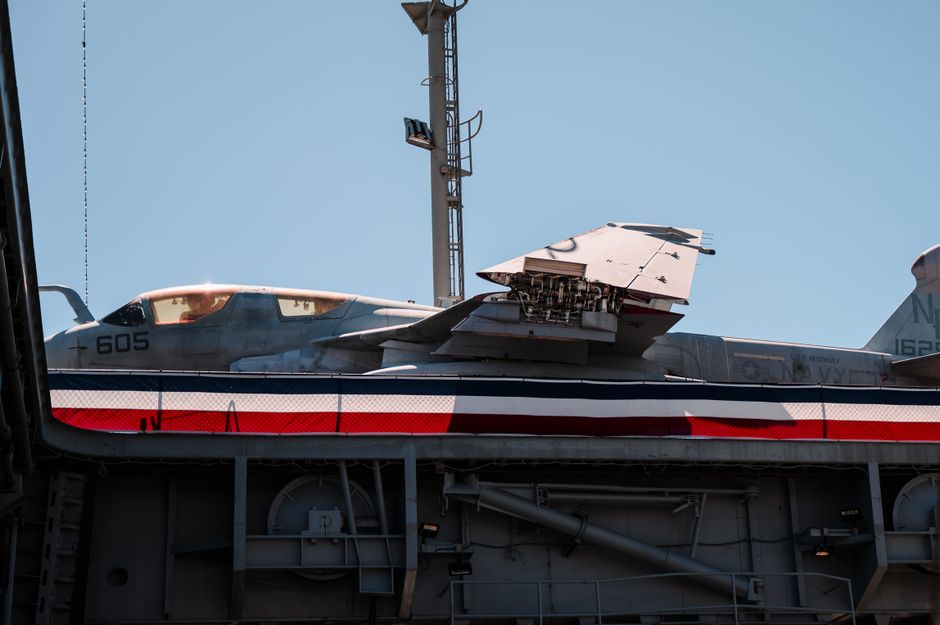
The USS Gerald R. Ford was supposed to be America's floating airport of the future. Instead, it's become a $13 billion lesson in why you don't fix what isn't broken, especially when "fixing" means replacing 70 years of proven steam catapult technology with an electromagnetic system that sounds cooler than it works.
Meet EMALS: the Electromagnetic Aircraft Launch System. On paper? Brilliant. Instead of using steam to fling F/A-18s off the deck, EMALS uses linear induction motors, think maglev train technology scaled up to launch 30-ton fighter jets from zero to 165 mph in two seconds.
What could go wrong?
Steam Catapults: Boring But Bulletproof
Steam catapults are older than your grandfather's Buick, but they work. Boil water, build pressure, release steam through a piston, launch plane. Simple physics that has successfully yeeted aircraft off carrier decks since 1951.
The Navy wanted something better. Steam systems are maintenance nightmares, requiring constant attention to seals, valves, and pistons. They're also one-size-fits-all: the same steam pressure launches everything from a 14,000-pound F/A-18 to a 74,000-pound E-2 Hawkeye, which isn't exactly efficient.
EMALS promised precision. Computer-controlled electromagnetic fields could deliver exactly the right amount of force for each aircraft. Less maintenance, more flexibility, fewer broken airframes from overly aggressive launches.
graph LR
    A[Steam Catapult] --> B[Boiler] --> C[Steam Pressure] --> D[Piston] --> E[Aircraft Launch]
    F[EMALS] --> G[Power Storage] --> H[Linear Motors] --> I[Electromagnetic Force] --> J[Aircraft Launch]

    style A fill:#90EE90
    style F fill:#FFB6C1
When Physics Meets Pentagon Procurement
EMALS requires enormous amounts of electrical power delivered in precise bursts. We're talking about storing enough energy to power 12,000 homes, then releasing it in 2.5 seconds. The Ford-class carriers needed entirely new electrical systems, going from steam-powered generators to nuclear-electric hybrid propulsion just to feed the catapults.
This created a cascade of complexity. New power systems meant new cooling systems. New electromagnetic fields meant new shielding to protect sensitive electronics. New computer controls meant new software, new training, and new ways for things to break.
The result? The Ford has spent more time in port getting EMALS fixed than at sea proving it works.
The $4 Billion Band-Aid
Since commissioning in 2017, the Ford has suffered through reliability rates that would make a 1990s Chrysler blush. EMALS was supposed to achieve 4,166 launches between major failures. Reality delivered closer to 400.
Problems ranged from mundane (software glitches) to spectacular (power system failures that left the entire catapult system dead). Every failure meant more time pier-side, more contractor visits, and more congressional hearings asking why the Navy's newest carrier couldn't do the one thing carriers exist to do.
The Navy has thrown an additional $4 billion at fixes since 2017. New power converters, updated software, redesigned components, essentially rebuilding EMALS while it's installed on an active warship.
The Sunk Cost Supercarrier
Here's where things get interesting from a defense acquisition perspective. The Ford-class program is too big to fail and too expensive to fix properly. Three more Ford-class carriers are under construction, each committed to EMALS technology.
Canceling EMALS now would mean admitting the Navy spent nearly two decades developing a system that doesn't work. Going back to steam would require redesigning ships already under construction. Moving forward means accepting that America's newest carriers will spend their early years as very expensive test platforms.
The Ford finally achieved initial operational capability in 2022, five years behind schedule. Even now, EMALS reliability hovers around 80% of requirements. Good enough for government work, apparently, but not exactly the reliability you want when launching $70 million F-35s into contested airspace.
Lessons in Defense Innovation
The EMALS saga illustrates everything wrong with Pentagon acquisition. The Navy tried to innovate too many things simultaneously: new catapults, new electrical systems, new power generation, new software integration. When one system failed, everything failed.
Meanwhile, the Nimitz-class carriers, with their ancient steam catapults, continue launching aircraft with boring, reliable consistency. Sometimes the most innovative thing you can do is recognize when innovation isn't needed.
The Ford-class will eventually work as advertised. The question is whether $20+ billion in development costs and a decade of delays were worth electromagnetic catapults that do the same job as steam, just with more complexity and cooler sound effects.
Get Defense & Donuts in your inbox
New posts delivered directly. No spam.
No spam. Unsubscribe anytime.