Why the Army's New $70,000 Helmet Can't Decide If It's a Weapon or a Video Game Controller
 K. Brennan
Somewhere in a Pentagon conference room in 2018, someone looked at a Microsoft HoloLens, looked at a soldier, and said: what if we charged $70,000 per unit and made it do everything at once? That person got a contract. The soldier got a headache, sometimes literally.
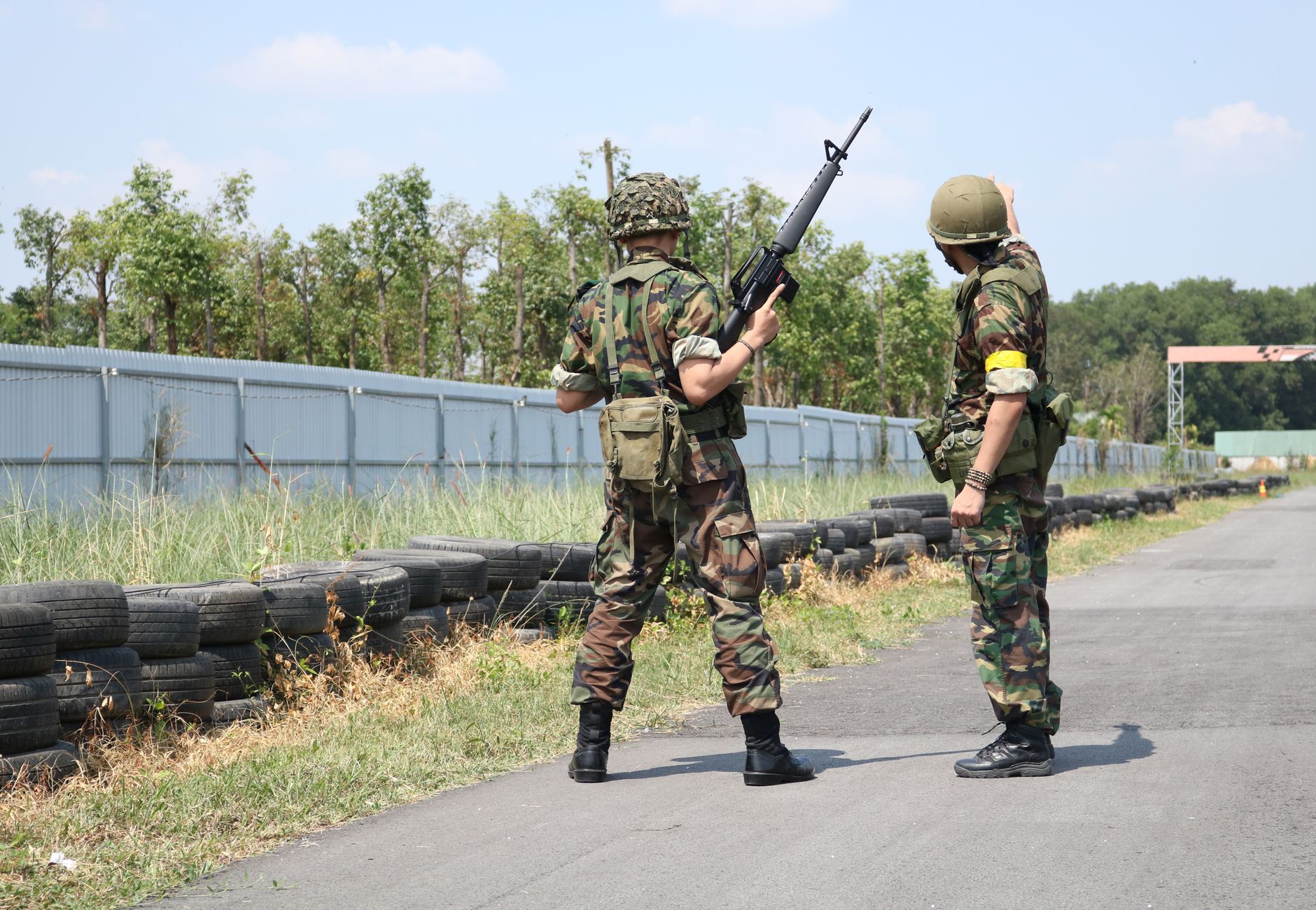 Photo by
 The Integrated Visual Augmentation System, known as IVAS, is the Army's attempt to give infantry soldiers a heads-up display that fuses thermal imaging, night vision, navigation, and fire control into a single wearable device. On paper, it sounds like exactly the kind of leap forward that justifies a multi-billion dollar investment. On a soldier's face, during field tests, it caused nausea, eyestrain, and what the Army's own after-action reports described as "degraded mission performance."
That's the technical term for "it made things worse."
How We Got Here
Microsoft won the IVAS contract in 2021, a 10-year, $21.9 billion deal to deliver roughly 120,000 units. The number alone should have raised flags. Twenty-two billion dollars for helmets. But the promise was real: a device that lets a soldier see around corners using drone feeds, tag targets for teammates, and navigate in total darkness without looking down at a map.
The problem is that "promising" and "field-ready" are not the same zip code.
By 2022, soldiers testing IVAS in operational trials were reporting consistent problems: the displays caused eye fatigue after less than an hour of use, the form factor was too bulky for vehicles, and the software glitched under the kind of stress that combat, or even realistic training, generates. An independent Pentagon assessment found that not a single one of the 12 key performance parameters had been fully met.
Not one.
The Donut Version of What Went Wrong
Here's a useful analogy. Imagine you asked someone to build you a donut that was also a protein shake, a GPS device, and a night light. Each of those things individually, fine. Useful, even. Stacked into one donut? You've created something that does all of them badly and none of them well.
That's IVAS. Augmented reality overlays require optical clarity and stable rendering. Thermal imaging requires sensor hardware with its own power draw and latency. Fire control integration requires reliable low-latency data links to weapons systems. Asking one wearable to nail all three simultaneously, while a soldier is sprinting through a building, is genuinely hard, and the schedule didn't leave enough time to find out how hard before contracts were signed.
graph TD
    A[IVAS Helmet] --> B(Thermal Imaging)
    A --> C(Augmented Reality HUD)
    A --> D(Navigation & Mapping)
    A --> E(Weapon Fire Control)
    B --> F{Field Test Result}
    C --> F
    D --> F
    E --> F
    F --> G[12/12 Key Parameters Failed]
Microsoft's Uncomfortable Position
Microsoft is not a defense contractor by DNA. They're a software company that makes enterprise tools and gaming platforms. HoloLens was, originally, a product for architects and surgeons and people who wanted to play Minecraft in their living room. Adapting that into battlefield hardware is not a minor software update, it's a fundamental rethinking of the device's purpose, durability, and operational envelope.
To be fair, Microsoft has iterated. IVAS 1.2, the current version under evaluation, reportedly addresses some of the display issues. The Army paused procurement in late 2022 specifically to let the hardware catch up with the contract's ambitions. That pause was probably the right call.
Still, pausing a $22 billion program two years in because the product made soldiers sick is not a great sentence to have on your program review.
What Actually Needs to Happen
The underlying goal of IVAS is worth pursuing. Situational awareness kills people when it's absent; technology that genuinely extends a soldier's perception without adding cognitive load could save lives. That's not hype, it's the entire reason armies have invested in optics, radios, and navigation tools for a century.
But the procurement approach treated a research-and-development problem like a production problem. A contract worth nearly $22 billion was awarded before the device had proven it could survive a field exercise, let alone a firefight. The incentive structure rewarded winning the bid over solving the problem.
Some programs need a longer runway before they get a dollar figure attached. IVAS was one of them. Instead, the Army bought 120,000 units of something that didn't work yet, and is now spending additional money figuring out how to make it work after the fact.
The irony is that the soldiers who'll eventually wear these things, if they ever actually work, had no seat at the table when the requirements were written. They were handed a $70,000 headset and told to evaluate it.
Most of them wanted their old night vision goggles back.
Get Defense & Donuts in your inbox
New posts delivered directly. No spam.
No spam. Unsubscribe anytime.