Why the Army's $1 Billion Joint Light Tactical Vehicle Can't Figure Out If It's Replacing the Humvee or Just Becoming One
 K. Brennan
The Humvee was supposed to be dead by now. That was the plan back in 2006, when the Army looked at the carnage IEDs were inflicting on lightly armored vehicles in Iraq and decided the whole platform needed to go. Enter the Joint Light Tactical Vehicle: a purpose-built replacement that would be faster, better protected, more capable, and light enough to sling under a helicopter.
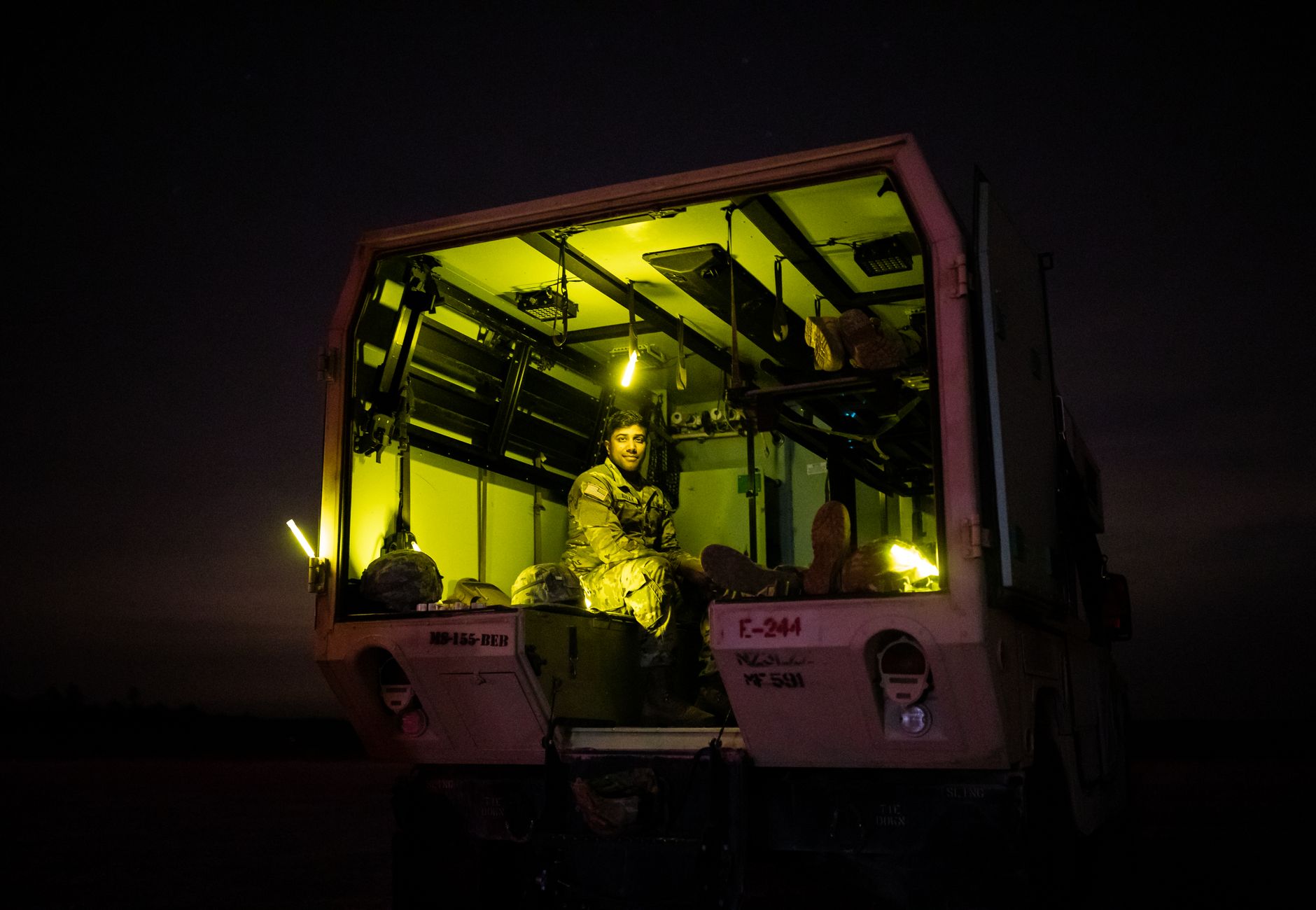 Photo by Art Guzman on Pexels.
That was twenty years ago.
The JLTV exists. Oshkosh Defense won the production contract in 2015, and the Army has received tens of thousands of them. They're genuinely impressive machines. The base vehicle weighs around 14,000 pounds, carries a crew of four with mine-blast protection that would have saved lives in Fallujah, and can hit 70 mph on paved road. By any reasonable measure, it's a better truck than the Humvee.
So why does the Army still operate over 100,000 Humvees?
The answer has several layers, and none of them are flattering.
Start with weight. The JLTV's protection comes at a price: it's roughly three times heavier than the original Humvee. That matters enormously when you're trying to move a vehicle by air. The CH-47 Chinook, the Army's workhorse medium-lift helicopter, can carry a JLTV. Barely. Under ideal conditions, with a stripped-down configuration and the right altitude. In a hot, high environment like Afghanistan's mountains or Iraq's summer heat, that math gets uncomfortable fast. The vehicle the Army bought to replace the Humvee is, in many scenarios, just as difficult to move as the MRAPs everyone agreed were too heavy to begin with.
Then there's cost. Each JLTV runs around $250,000 to $400,000 depending on variant and contract year. A comparable Humvee, refurbished, costs a fraction of that. For units that need a lot of trucks and aren't expecting direct contact with sophisticated threats, the Humvee pencils out. So the Army kept buying them. So did the Marine Corps. So did the National Guard, which has whole fleets of Humvees that won't see a JLTV for another decade, if ever.
The procurement logic here is genuinely strange. The whole justification for the JLTV program was that the Humvee was too vulnerable and too old to survive modern threats. Congress accepted that argument. The Army spent roughly $1 billion just on development before a single production vehicle rolled off the line. And the conclusion the service reached after all that was: we need both.
Not a clean replacement. A parallel fleet.
Here's a diagram of how that decision tree actually played out:
graph TD
    A[Humvee deemed obsolete post-Iraq] --> B[JLTV program launched 2006]
    B --> C[Oshkosh wins contract 2015]
    C --> D{Is the JLTV too heavy?}
    D -->|Yes| E[Keep Humvees for light missions]
    D -->|No| F[Buy JLTVs for protected missions]
    E --> G((Parallel fleet maintained))
    F --> G
What you're looking at is a program that solved one problem and created another. The JLTV is well-protected; the Humvee is airliftable. The Army needs both things simultaneously and has no vehicle that does both well. That's the gap nobody talks about in the press releases.
Oshkosh has proposed lighter variants. The Army has studied them. There's ongoing work on what might come after the JLTV, sometimes called a "next generation" light vehicle that would actually hit the weight targets the JLTV missed. That program doesn't have a firm timeline or a firm budget. What it has is a lot of briefings.
Meanwhile, some Humvees currently in service are old enough to vote. Frames from the early 2000s, engines that have been rebuilt multiple times, electrical systems that predate smartphones. Keeping them operational costs money every year, which chips away at the theoretical savings from not buying JLTVs.
The Army isn't stupid about this. Program managers understand the tradeoffs. The real issue is that "replace the Humvee" was always a simpler goal than the actual requirement: a vehicle that's protected enough to survive modern threats, light enough to move by air, cheap enough to buy in quantity, and rugged enough to last decades in austere environments. Those requirements pull in different directions. No single vehicle has threaded that needle yet.
The JLTV is a good truck. Buy one if you're an army. Just don't throw away your old trucks yet, because apparently nobody else is.
Get Defense & Donuts in your inbox
New posts delivered directly. No spam.
No spam. Unsubscribe anytime.