Why the Army's $3.4 Billion Mobile Protected Firepower Tank Can't Figure Out If Light Infantry Actually Needs a Tank
 K. Brennan
The 82nd Airborne does not traditionally travel with tanks. That's a feature, not an oversight. Light infantry units are built around speed, airlift, and getting somewhere fast with enough firepower to matter before heavier forces arrive. Adding a 38-ton armored vehicle to that equation takes some explaining.
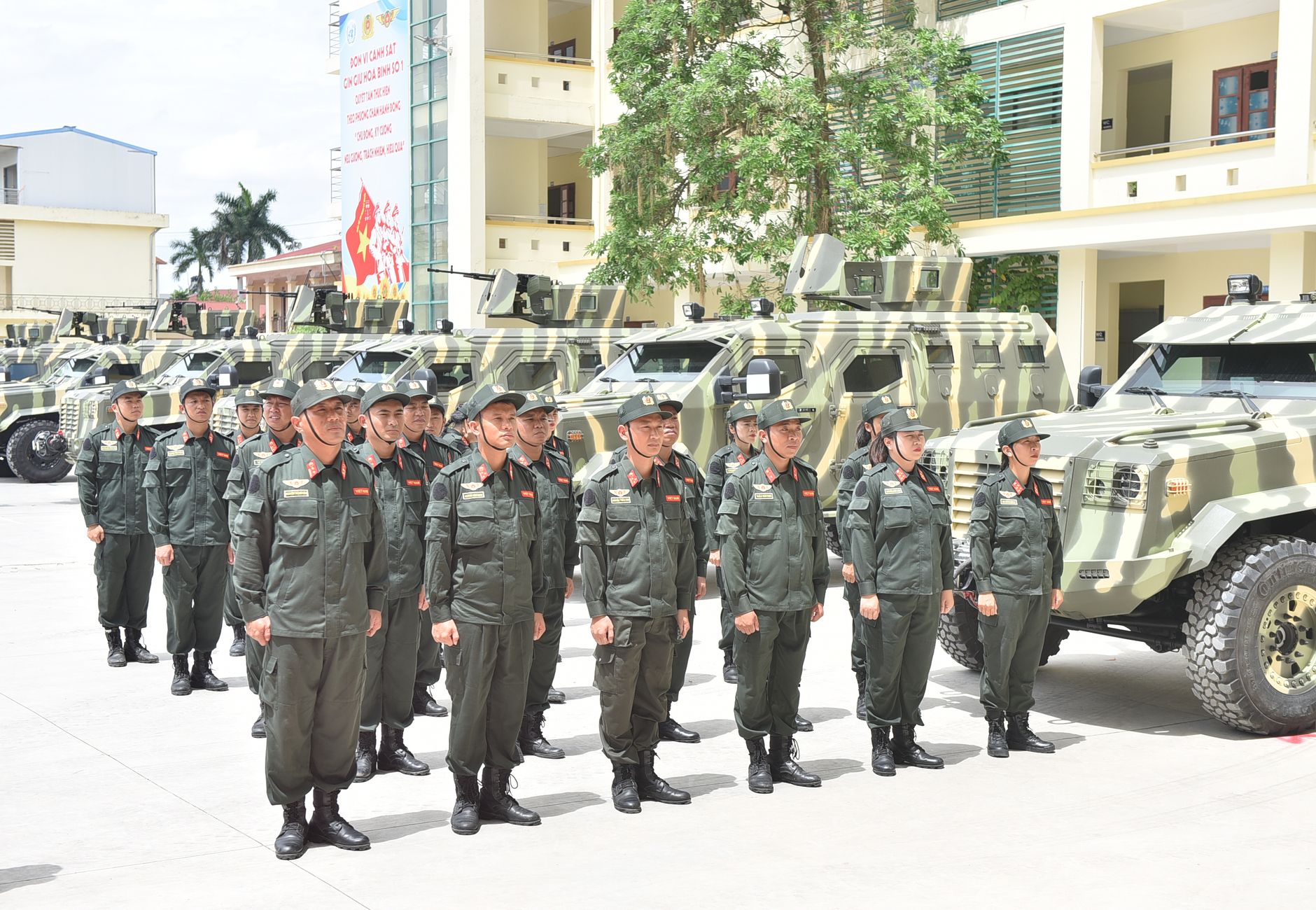 Photo by Felix Young on Pexels.
The Army has been doing that explaining for about seven years now, with a price tag currently sitting around $3.4 billion for the Mobile Protected Firepower (MPF) program. General Dynamics Land Systems won the contract in 2022 to deliver 504 vehicles. The first production units started rolling out in 2024. And the program is already generating the kind of questions that make program managers visibly uncomfortable at hearings.
Here's the core pitch: light infantry units like the 82nd and 101st Airborne sometimes run into fortified positions, light armor, or enemy vehicles that their current weapons can't handle cleanly. A javelin missile works fine against a tank, but it costs $78,000 per shot and takes time to set up. What they supposedly need is something fast, relatively light, and capable of putting a 105mm cannon round through a wall before the enemy figures out what's happening.
Sounds reasonable. The problem is "relatively light" is doing enormous work in that sentence.
At roughly 38 tons, the MPF is lighter than an M1 Abrams (about 73 tons). But it still can't fit inside a C-130, which was an early design goal that got quietly retired when the physics refused to cooperate. The C-17 can carry it. Two of them, actually. So in a rapid deployment scenario, getting a meaningful number of MPF vehicles somewhere fast requires a serious airlift commitment that competes directly with everything else those aircraft could be carrying: fuel, ammunition, infantry, medical supplies.
The vehicle the MPF most resembles is the Cold War-era M8 Armored Gun System, a program the Army killed in 1996 after concluding that light infantry didn't actually need organic tank-like firepower badly enough to justify the cost and logistics burden. The Army has since revisited that conclusion. Whether the revisit is correct, or whether it reflects institutional momentum more than genuine operational need, is a question worth asking.
Protection is another issue. The MPF carries lighter armor than an Abrams, by design, to keep the weight manageable. In the threat environments where light infantry actually operates today, that tradeoff may be acceptable. Against peer adversaries with modern anti-armor systems, it's a different calculation. A vehicle that looks like a tank but can be killed by threats a tank would shrug off puts crews in a tricky spot.
The testing record has been mixed. Early operational testing found reliability issues with the drivetrain and fire control system integration. The Army declared the vehicle ready for low-rate initial production anyway, citing acceptable risk, which is the procurement equivalent of "we'll fix it in the sequel."
To be fair, some light infantry commanders genuinely want this capability. There are real scenarios, particularly in the Pacific, where forces might need to hold terrain against armored threats while waiting for heavier assets. The MPF gives brigade combat teams an organic option they currently lack. That argument has merit.
What it doesn't have is a clean answer to the airlift problem, the protection tradeoff, or the question of whether $3.4 billion buys a capability that couldn't be achieved more cheaply with better anti-armor missiles and more of them.
Here's what the acquisition path actually looked like:
graph TD
    A[Requirement: Light Infantry Needs Armor] --> B(Industry Proposals Solicited)
    B --> C{Competing Designs Evaluated}
    C --> D[GDLS Contract Award 2022]
    D --> E(Prototype Testing)
    E --> F{Reliability Issues Found}
    F --> G[Low-Rate Initial Production Approved]
    G --> H((Fielding Begins 2024))
That diamond at step six is where programs usually slow down. The MPF didn't slow down.
The deeper tension here isn't about one vehicle program. The Army has been trying for decades to give light forces more punch without making them heavy, and every attempt runs into the same wall: punch weighs something. Armor weighs something. Logistics weighs something. You can optimize around the edges, but you can't fully escape the tradeoff.
Maybe the MPF threads that needle well enough to justify its cost. Maybe in ten years it'll be the capability light infantry commanders swear they can't live without. Programs have surprised skeptics before.
Or maybe the Army just spent $3.4 billion discovering, again, that light infantry is light for a reason.
Get Defense & Donuts in your inbox
New posts delivered directly. No spam.
No spam. Unsubscribe anytime.