Why the Army's $1 Billion Robotic Logistics Truck Can't Figure Out How to Cross a Dirt Road
 K. Brennan
Somewhere in the Pentagon's wish list for the future battlefield is a beautiful idea: autonomous trucks that haul fuel, ammo, and water to the front lines without putting a single soldier in a cab. No driver. No convoy escort. No one getting shot at on a supply run. It sounds obvious, and it should work. The Army has been chasing this vision, under various program names, for the better part of two decades.
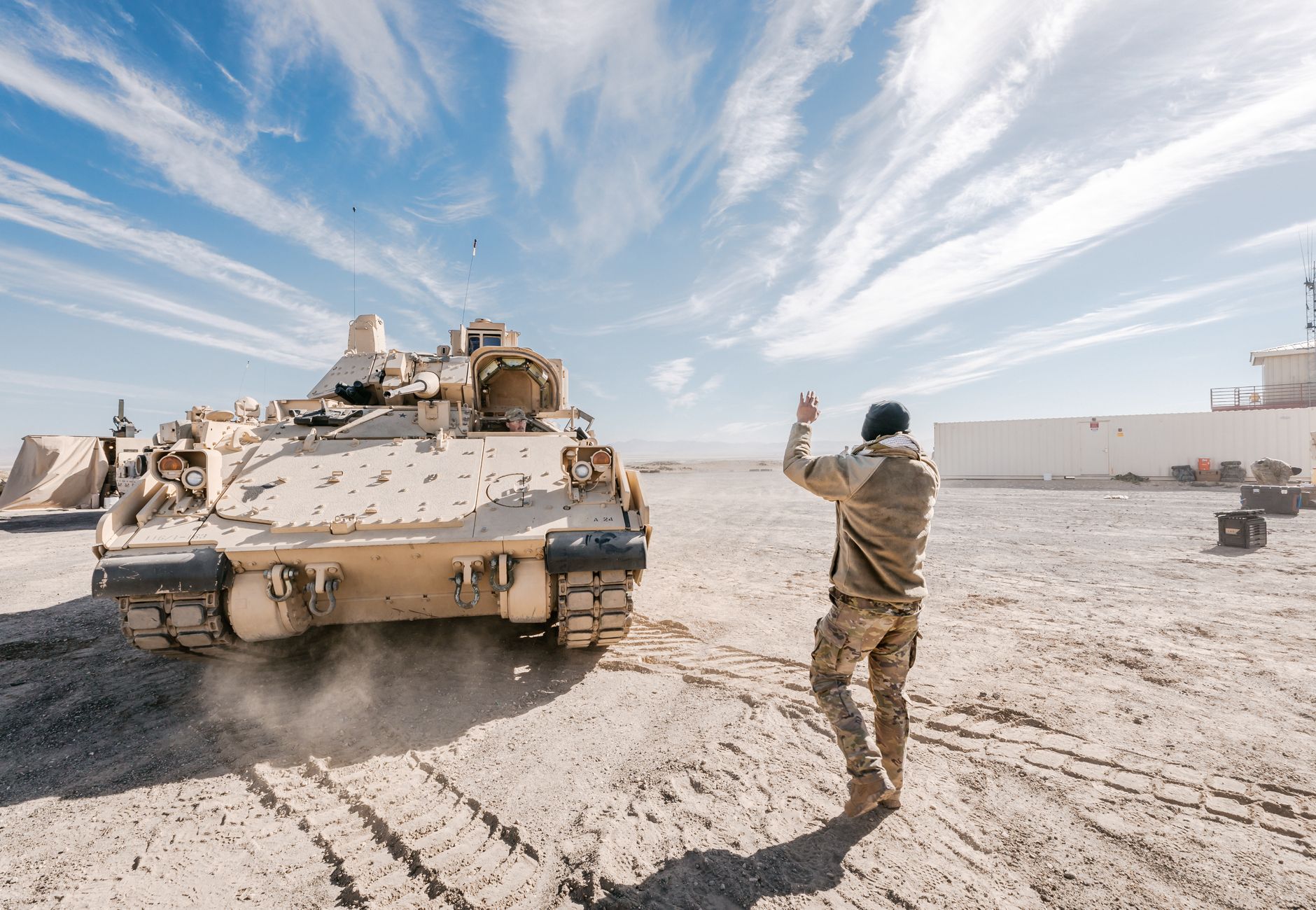 Photo by Art Guzman on Pexels.
So far, the mud keeps winning.
The program currently carrying the banner is called Robotic Combat Support Vehicle, or RCSV, wrapped inside the broader Autonomous Multi-Domain Launcher and ground resupply ecosystem. Before that, there was the Leader-Follower program, where a human-driven truck would guide a string of autonomous followers behind it. Before that, there was the Ground Unmanned Support Surrogate. The names change. The core problem does not: getting a 20-ton logistics vehicle to navigate unpredictable terrain, in contested environments, without a human babysitting every meter of the route.
The Army has spent somewhere north of $1 billion across these overlapping efforts when you count the autonomy software development, platform integration, and field experiments. The Government Accountability Office has flagged the programs multiple times for unclear requirements and schedule slippage. That's familiar territory for anyone who follows this beat.
Here's the actual technical knot. Commercial autonomous vehicles, the ones companies like Waymo and Kodiak have spent billions developing, work because roads are predictable. Lane markings, curbs, traffic signals, GPS coverage: the environment is structured and mostly forgiving. A military logistics truck headed toward a forward operating base in eastern Europe, or a jungle trail in the Pacific, faces none of those conveniences. Soft soil. Washed-out creek crossings. Unmarked intersections. Deliberate enemy jamming of GPS signals. The autonomy stack that handles a highway beautifully falls apart when it encounters a rutted farm track with a 40-centimeter drop it wasn't expecting.
The Army's solution has been to layer sensors: lidar, radar, cameras, and inertial navigation so the truck can dead-reckon when GPS goes dark. That sounds reasonable on paper. In practice, sensor fusion at the speeds and vibration levels of an off-road military vehicle generates a staggering amount of noise. The software has to make real-time decisions about whether a dark patch ahead is shadow, water, or a drop-off that will roll the truck. Getting that wrong in testing means a recovery operation. Getting it wrong in a contested zone means a burning vehicle full of ammunition sitting on a road the enemy can now find.
There's also the command-and-control problem, which doesn't get enough attention in press releases.
graph TD
    A[Mission Order Issued] --> B{GPS Available?}
    B -- Yes --> C[Autonomous Route Execution]
    B -- No --> D[Dead Reckoning Mode]
    C --> E{Obstacle Detected?}
    D --> E
    E -- Passable --> F[Continue Mission]
    E -- Uncertain --> G((Human Override Request))
    G --> H[Operator Response Delayed or Unavailable]
    H --> F
When the truck hits something it can't classify, it needs a human decision. That human is supposed to be a remote operator, possibly managing several vehicles at once, possibly under communications blackout because the enemy is jamming the network. The fallback behavior, what the truck does when it can't get an answer, is one of the hardest design questions in the whole program. Stop in place and wait? That makes it a target. Try to reroute? Rerouting on unknown terrain is exactly the problem it already couldn't solve.
None of this means the effort is pointless. Convoy ambushes have historically been one of the most effective ways to attrit U.S. logistics in a ground campaign. Removing human drivers from those routes is genuinely worth pursuing. The Army's experiments at Fort Campbell and during Project Convergence exercises have shown real progress on structured routes, paved surfaces, and controlled conditions.
Controlled conditions, though, are not where the Army loses logistics troops.
What the program needs is less emphasis on achieving full autonomy everywhere and more honest prioritization: which routes, which terrain types, which mission profiles can the system handle reliably right now? Build from there. The obsession with demonstrating end-to-end autonomy in the most demanding environments has consistently produced impressive demos followed by years of quiet setbacks.
The dirt road will still be there. The question is whether the Army figures out how to cross it before the next program name change.
Get Defense & Donuts in your inbox
New posts delivered directly. No spam.
No spam. Unsubscribe anytime.