Why the Army's XM30 Infantry Fighting Vehicle Has Spent $20 Billion Trying to Replace a 50-Year-Old Box
 K. Brennan
The Bradley Fighting Vehicle entered service in 1981. Ronald Reagan was in his first term. MTV had just launched. A gallon of gas cost $1.25. And the U.S. Army has been trying to replace the Bradley ever since, pouring somewhere north of $20 billion across a graveyard of failed programs before landing on the current contender: the XM30 Mechanized Infantry Combat Vehicle.
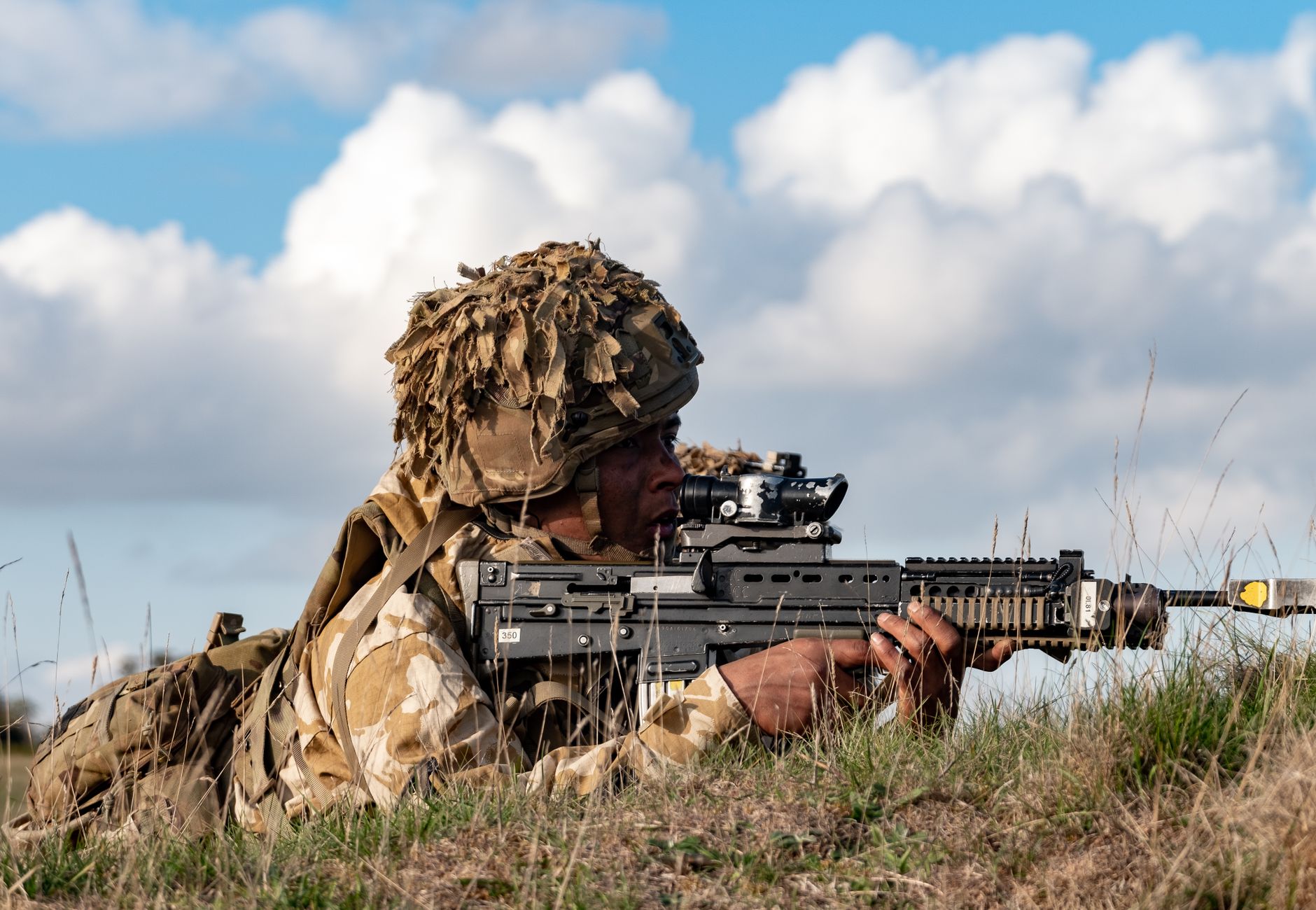 Photo by Mick Latter on Pexels.
That's not a typo. Twenty billion dollars. Across programs with names like GCV, AMPV (which became something else entirely), and the ill-fated Future Combat Systems, the Army has spent generational money trying to field something newer and deadlier than a vehicle old enough to collect Social Security. The XM30 is what survives.
So what exactly is the XM30 supposed to do?
The stated goal is straightforward: give infantry squads a vehicle that can survive on a peer-competitor battlefield, carry soldiers in protected comfort, and kill armored threats at range. Bradley does most of that. Poorly, in some cases. Its 25mm cannon is aging out of relevance against modern active protection systems, its armor has been repeatedly upgraded to the point where the vehicle weighs so much it barely fits on transport aircraft, and the crew ergonomics are, charitably, a product of a different era.
The XM30 is supposed to fix all of that. Two finalists are competing for the contract: American Rheinmetall Vehicles (a U.S.-German partnership built around the Lynx platform) and General Dynamics Land Systems with its Griffin III. Both vehicles look genuinely impressive on paper. Both promise improved lethality, better protection, digital integration with Army network systems, and a 50mm cannon that can reach out and ruin someone's day at standoff ranges no current IFV can match.
Here's where it gets complicated.
The Army's requirements for the XM30 kept shifting throughout the competition. At various points, the service wanted the vehicle to carry nine soldiers, then fewer, then include autonomous capabilities, then prioritize survivability over payload, then reconsider weight limits because the damn thing needs to actually get places. Program managers watched requirements documents grow longer while timelines stretched further. Sound familiar?
This is the same pattern that killed the Ground Combat Vehicle in 2014. That program, which was meant to field by 2017, got canceled after costs ballooned and the requirements became a wishlist written by a committee that couldn't agree on lunch, let alone tradeoffs between armor weight and airlift compatibility. Before GCV there was Future Combat Systems, an $18 billion effort canceled in 2009 that was supposed to produce a networked family of vehicles so advanced they never quite existed outside of PowerPoint.
The XM30 is currently scheduled to begin low-rate initial production in 2027, with full fielding sometime in the early 2030s. Which means, best case, soldiers will be riding something new while the Bradley turns 50. Treat that timeline with the skepticism it deserves.
What makes the XM30 genuinely interesting, underneath all the procurement scar tissue, is the 50mm XM913 chain gun. That weapon can defeat most armored vehicles at ranges that make current Russian and Chinese IFVs uncomfortable. It also has programmable airburst ammunition, which is the kind of capability that changes how infantry suppresses fortified positions. If the platform gets fielded at anything resembling the promised spec, it represents a real generational leap over Bradley.
The active protection system integration also matters. Both competing vehicles are designed around defeating top-attack munitions and loitering drones, which is less a futuristic feature than a lesson written in Ukrainian fields over the past few years. Any vehicle going into service in 2030 without serious drone countermeasures is already obsolete.
Down-selection is expected sometime in 2026. Then comes source selection protests, because there are always protests. Then contracts, then engineering and manufacturing development, then operational testing, then fielding delays, then cost growth, then a congressional inquiry or two.
Or, if the Army gets its act together and holds the requirement line, something better than a 50-year-old box finally shows up in the motor pool.
Bradley soldiers on in the meantime. It always does.
Get Defense & Donuts in your inbox
New posts delivered directly. No spam.
No spam. Unsubscribe anytime.