Why the Army's $43 Billion IVAS Headset Gave Soldiers Headaches Instead of Superpowers
 K. Brennan
Picture the pitch meeting. Someone at the Pentagon slides a deck across the table: What if every soldier could see through walls, tag enemies in real time, and never get lost in a firefight? The room loses its mind. A contract gets signed. Microsoft gets a phone call.
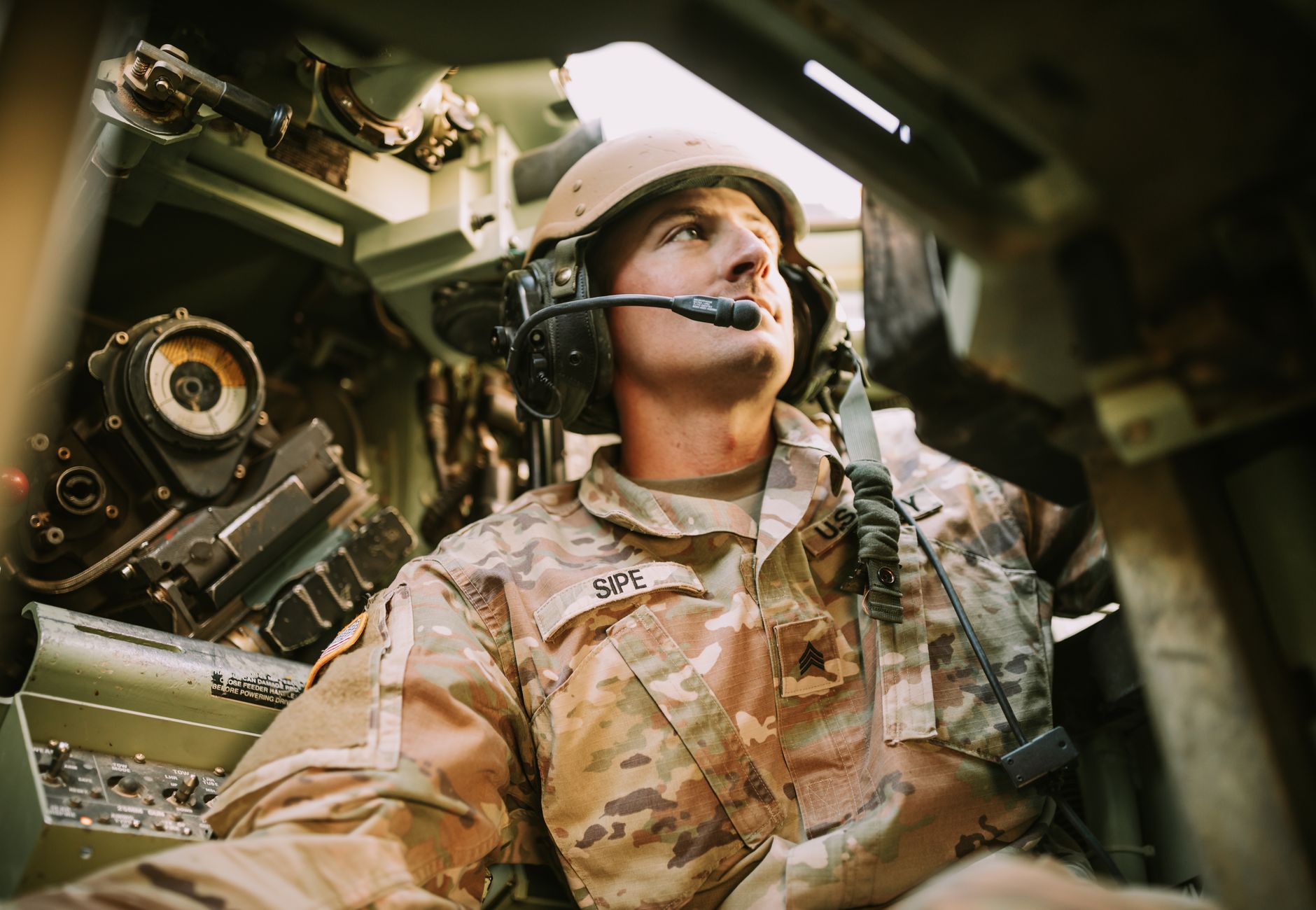 Photo by Art Guzman on Pexels.
That's roughly how the Integrated Visual Augmentation System, IVAS, pronounced eye-vass, came to be. Built on Microsoft's HoloLens 2 platform and wrapped in a ruggedized housing, IVAS was supposed to layer a heads-up display of tactical data directly onto a soldier's view of the battlefield: enemy positions, friendly forces, navigation cues, even targeting reticles synced to weapon sights. The Army called it a "single platform" for training, rehearsal, and combat operations. Congress called it a $21.88 billion contract, later ballooned toward $43 billion over its lifecycle.
Soldiers called it something else. Several somethings, actually, none of them printable here.
What IVAS Was Supposed to Do
The concept isn't crazy. Augmented reality overlays have obvious military value. If a squad leader can see a real-time map of a building superimposed on the actual building, that's not a gimmick, that's a genuine tactical edge. The system was also designed to feed data from the Army's broader network of sensors, drones, and command software, meaning a soldier could theoretically receive targeting updates from a drone pilot three miles away without touching a radio.
There's also a training angle. IVAS promised to replace a room full of expensive simulators with a headset that turns any parking lot into a synthetic battlefield. Run a platoon through a hostage rescue scenario in the actual building they'll hit tomorrow. That matters.
Here's where the plan ran into physics.
The Part Where Soldiers Started Vomiting
In 2021, the Army conducted a soldier touchpoint evaluation. Pentagon speak for "we finally let real humans try this thing under real conditions." The results were not great. Troops reported eye strain, nausea, tunnel vision, and difficulty seeing the display in direct sunlight. Some couldn't wear it for more than 20 minutes without symptoms. One test report noted that soldiers struggled to maintain situational awareness because the goggles were partially obscuring their natural field of view.
Which is a remarkable problem for a device designed to enhance situational awareness.
The Army paused the initial production contract in 2022 after the Government Accountability Office flagged the test results. Microsoft went back to the drawing board on the display optics. A new version, dubbed IVAS 1.2, entered testing, with the Army promising improvements to the display, battery life, and the general "please stop making us sick" problem.
As of late 2024, the program was still grinding through developmental testing, still behind its original schedule, and still trying to prove to skeptical soldiers that the thing on their face is an asset rather than a liability.
graph TD
    A[IVAS Concept Approved] --> B[Microsoft HoloLens Contract Signed]
    B --> C[Initial Prototypes Delivered]
    C --> D{Soldier Testing}
    D --> E[Nausea / Eye Strain Reports]
    D --> F[Tactical Use Cases Validated]
    E --> G[GAO Flags Issues / Production Paused]
    G --> H[IVAS 1.2 Redesign Begins]
The Deeper Problem
Beyond the optics headaches, literal and figurative, IVAS exposes a procurement habit the Pentagon hasn't kicked: buying the promise of a technology rather than the technology itself.
HoloLens 2 is a genuinely impressive consumer-grade AR device. Microsoft built it for enterprise use cases: factory floors, surgical training, remote collaboration. It was never designed to function while the wearer is sprinting through a breach, getting shot at, and running on four hours of sleep. Ruggedizing it helped. Bolting military software onto it helped less than expected. The gap between "impressive demo in a conference room" and "reliable tool in a firefight" turned out to be enormous, and expensive.
That gap gets papered over at contract signing because everyone involved has an incentive to be optimistic. The contractor wants the work. The program office wants the capability. The generals want the briefing slide with the cool graphic. Nobody's career advances by saying this technology isn't ready.
So the Army bought 120,000 units, worth roughly $400 million in the initial tranche, before soldiers ever wore them in realistic conditions.
So Where Does It Land?
IVAS isn't dead. The Army still believes in the underlying concept, and honestly, they're probably right to. Battlefield AR is coming regardless; the question is whether you develop it carefully or buy a pivot-to-enterprise headset and duct-tape camo wrap to it.
The 1.2 revision may solve the display issues. The program office insists it's on track. They've said that before.
What's certain is that $43 billion is an extraordinary amount of money to spend finding out that staring at a bright holographic display while a drill sergeant screams at you is harder than it looks on a product demo video. The soldiers figured that out in about twenty minutes.
Somebody should have asked them sooner.
Get Defense & Donuts in your inbox
New posts delivered directly. No spam.
No spam. Unsubscribe anytime.