Why the Army's $4 Billion Precision Strike Missile Can't Quite Hit Its Range Target
 K. Brennan
The Precision Strike Missile was supposed to solve a specific, urgent problem: the Army needed something that could reach out and touch targets well beyond the old ATACMS range before China or Russia could scatter them. Congress and the Pentagon signed off. Contracts went out. Lockheed Martin got to work.
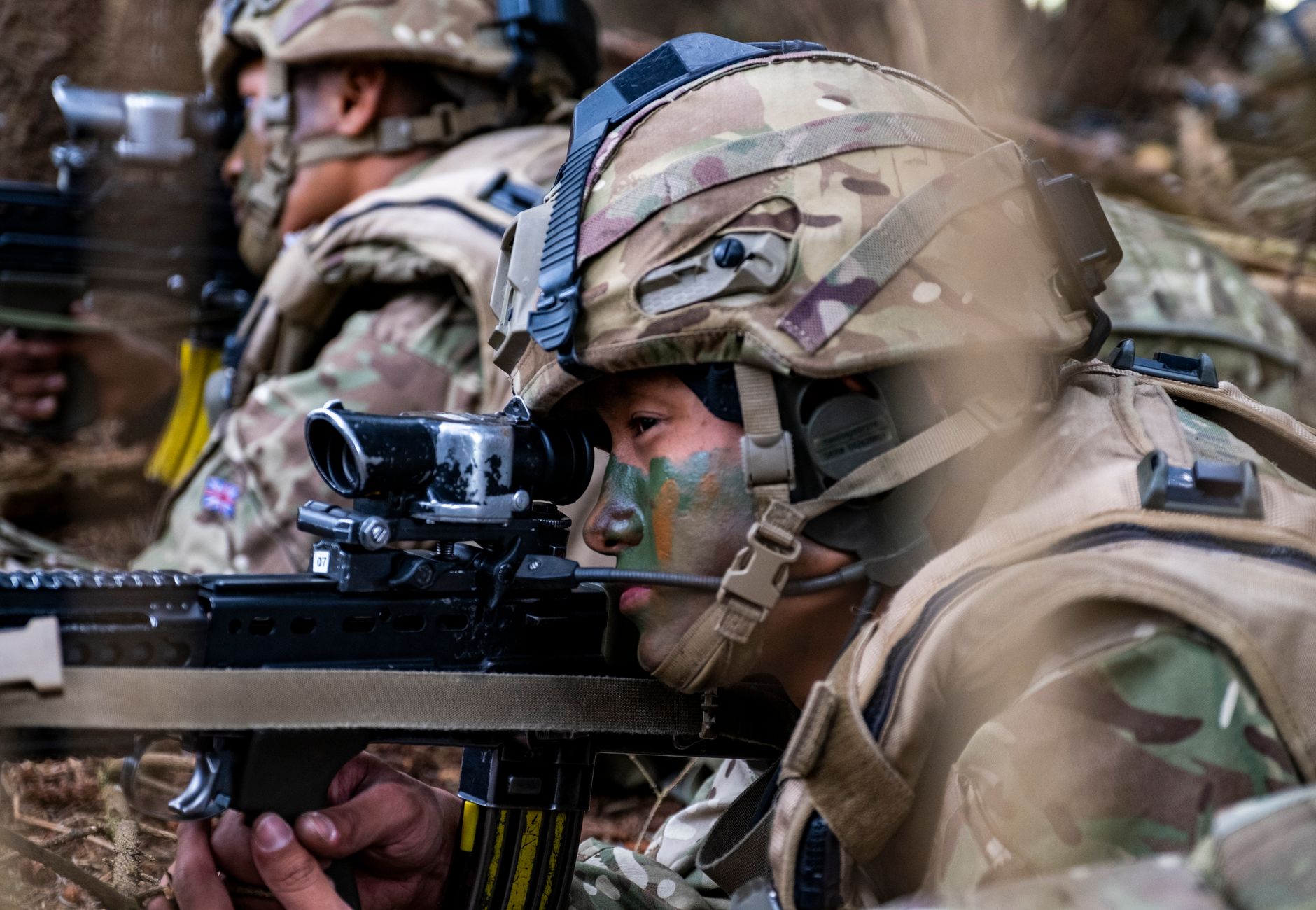 Photo by Mick Latter on Pexels.
That was 2019.
Here in 2026, PrSM exists, flies, and has even been incrementally fielded to a handful of units. What it has not done is consistently demonstrate the 500-kilometer range the Army originally advertised as the whole point of the program. Current operational variants hover closer to 400 kilometers. The gap doesn't sound catastrophic on paper. On a map of the Western Pacific, it's the difference between shooting from relative safety and parking your launcher somewhere extremely uncomfortable.
What PrSM Was Supposed to Be
ATACMS, the missile PrSM replaces, maxes out around 300 kilometers and was designed in the 1980s. Good missile for its era. The era has changed. Chinese anti-ship and land-attack capabilities have pushed the "keep-out zone" for U.S. surface forces steadily outward, and 300 kilometers of reach doesn't get you very far when adversary systems can threaten assets from twice that distance.
PrSM Increment 1, currently fielded, hits roughly 400km. Increment 2 was supposed to add a maritime strike capability and push range further. Increment 3 would layer in a seeker capable of hitting moving targets at sea. Increment 4, somewhere out in the future, would theoretically cross that 500km threshold with a glide phase bolted on.
Four increments. Each one a separate contract action, a separate test program, a separate opportunity for schedule slippage.
graph TD
    A[Increment 1\n~400km, land targets] --> B[Increment 2\nMaritime strike seeker]
    B --> C[Increment 3\nMoving target engagement]
    C --> D[Increment 4\n500km+ glide phase]
    D --> E{Full Operational Capability}
    A --> F((Currently Fielded))
The Army structured PrSM this way deliberately. Incremental development is supposed to get something useful to soldiers faster while more capable versions mature behind it. The logic holds in theory. In practice, each increment has its own budget fight, its own testing delays, and its own political surface area for getting trimmed or restructured when priorities shift.
The Range Problem Isn't Just a Number
Why does 100 kilometers matter so much? Because military geography is unforgiving about thresholds.
In a Taiwan scenario, the distances between the Philippine island chain, Taiwan itself, and the Chinese mainland compress fast. Launchers based on Luzon sit around 400 kilometers from the strait. That puts Increment 1 at the very edge of useful range, with zero margin for positioning, terrain masking, or the tactical reality that you don't always get to park exactly where the map says you should.
Push to 500km and suddenly you have options. You can hide the launcher. You can cover multiple axes. You can actually execute what the Army's multi-domain operations concept describes on paper.
The missile that exists today is genuinely useful against fixed land targets at medium depth. What the joint force needs, especially the Navy and Marine Corps trying to execute distributed maritime operations, is the version that can kill a moving ship from a concealed position ashore. That's Increment 2 and 3. Neither has completed developmental testing.
Who's Actually Responsible Here
Lockheed gets the easy villain role, but the picture is messier. The Army restructured requirements mid-program after early flight tests revealed aerodynamic performance margins tighter than expected. Range estimates had been based on modeling that turned out to be optimistic, which is a polite way of saying the numbers in the briefing slides didn't survive contact with the atmosphere.
That kind of requirement revision mid-stream is expensive. It resets test timelines, requires new contractor proposals, and burns through program reserves that were supposed to cover exactly this kind of contingency.
Pentagon budgeteers have also not helped. PrSM has seen funding profiles adjusted in three consecutive budget cycles, with plus-ups promised and then partially clawed back during continuing resolution periods. You cannot accelerate a missile development program on a budget that arrives six months late and fifteen percent smaller than planned.
Some of that is genuine fiscal pressure. Some of it is the DoD's institutional habit of treating development programs as a bill-payer when near-term readiness accounts run short.
Where Things Stand
Increment 1 is in the field with the 1st Multi-Domain Task Force and a few other units. Real missile, real capability, real limitations. The Army has publicly committed to Increment 2 first flight testing in the next 18 months, a timeline that defense analysts who track these programs have greeted with cautious skepticism.
Meanwhile, Ukraine has demonstrated repeatedly that precision long-range fires win arguments that no amount of doctrine can win on its own. Every month PrSM Increment 2 spends in the test pipeline is another month the Army fields a missile that's better than ATACMS but short of what the threat environment actually demands.
Four hundred kilometers is a real capability. The Army should say so plainly, field what works, and stop letting press releases imply the 500km version is just around the corner. It isn't around the corner. It's two increments and several budget cycles away, assuming nothing else slips.
That's worth being honest about. The soldiers who have to position these launchers in a contested environment deserve better than optimistic slide decks.
Get Defense & Donuts in your inbox
New posts delivered directly. No spam.
No spam. Unsubscribe anytime.