Why the Army's $1 Billion SHORAD Missile System Can't Decide If the Threat Is a Drone or a Helicopter
 K. Brennan
Short-range air defense sounds simple enough. Things fly low and slow. You shoot them. Done.
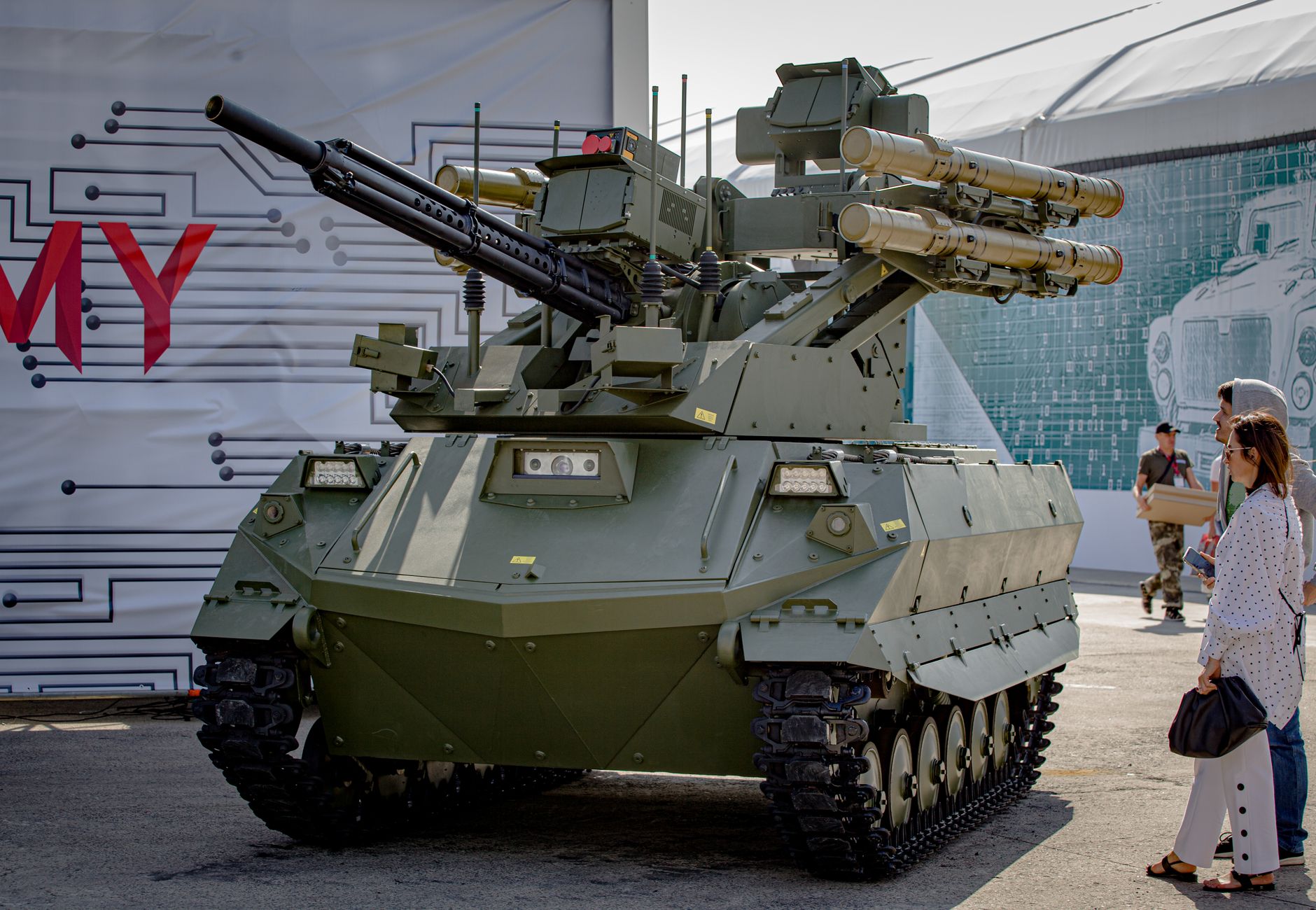 Photo by Sergey Platonov on Pexels.
Except the Army's Indirect Fire Protection Capability program, known as IFPC, has spent the better part of a decade trying to answer one genuinely hard question: what, exactly, is it supposed to shoot?
The answer keeps changing. And that's the whole problem.
How You Build a System for a Threat You Haven't Defined Yet
IFPC started as the Army's answer to a gap everyone could see. After years of focusing almost exclusively on high-end missile defense, the service had basically nothing to stop a cruise missile skimming in at 500 feet, or a swarm of quadcopters carrying a shaped charge, or an attack helicopter popping up from a tree line. The threat portfolio below Patriot's radar coverage was, diplomatically speaking, wide open.
So the Army launched IFPC around 2016 with a broad mandate: protect fixed and semi-fixed sites from rockets, artillery, mortars, cruise missiles, and unmanned aircraft. That's a staggering range of targets, spanning everything from a 40mm mortar round to a 500-knot cruise missile.
Early testing used the Enduring Shield launcher mated to AIM-9X Sidewinder missiles, a combination that made sense on paper. The AIM-9X is a proven air-to-air missile with serious infrared sensitivity. Strap it to a ground launcher, point it at incoming threats, problem solved.
Except the problem wasn't solved. The seeker logic optimized for manned aircraft doesn't translate cleanly to small drones with tiny heat signatures. A Group 3 UAS flying at 3,000 feet looks nothing like an F-16 in afterburner. The missile wants a heat source it can recognize. A battery-powered drone running cool motors gives it very little to work with.
The Threat Moved. The Program Didn't (Fast Enough).
Here's where the timing gets painful. IFPC spent years in requirements definition and early development while the drone threat was still mostly theoretical. By the time serious testing began, Ukraine had already shown the world what a $500 FPV drone could do to a $3 million armored vehicle. The program's baseline assumptions were obsolete before the first Soldier touched the system.
The Army responded by layering on additional requirements. Now IFPC needed to handle not just cruise missiles and helicopters but also Group 1, 2, and 3 UAS. That meant integrating new sensors capable of detecting small, slow, low-observable targets that conventional air defense radar tends to ignore entirely.
Radar optimized for fast movers struggles with a 55-pound drone doing 60 knots at 400 feet. The return signature looks like a bird, or ground clutter, or nothing at all. You need different radar modes, different processing, different engagement logic. Bolting that onto a system designed around a different threat set creates real engineering tension.
Consider what the engagement timeline looks like when requirements pull in two directions at once:
graph TD
    A[Sensor Detects Contact] --> B{Threat Classification}
    B --> C[Fast Mover / Cruise Missile]
    B --> D[Small UAS / Drone]
    C --> E[AIM-9X Engagement]
    D --> F{Seeker Confidence?}
    F --> G[Engage]
    F --> H[No Lock - Threat Passes]
That diamond in the middle is where the program lives right now. The sensor sees something. The system has to decide what it is and whether the missile can actually kill it. If the answer is uncertain, the engagement window closes in seconds.
The Budget Math Isn't Helping Either
IFPC has already burned through significant funding across multiple increment efforts, with Increment 1 focused on counter-rocket and mortar (largely handed off to other programs) and Increment 2 carrying the full air defense burden. The Government Accountability Office has flagged schedule slippage across multiple review cycles. The program's unit cost estimates have shifted as the requirements shifted.
Meanwhile, counter-drone solutions are proliferating from industry at prices that make the IFPC acquisition model look like it's moving in geological time. Rafael, L3Harris, Epirus, Anduril: all have fielded or are fielding directed energy and kinetic counter-UAS systems faster than a major defense acquisition program can complete a milestone review.
The Army is aware of the gap. They're running parallel efforts under the broader MSHORAD and counter-UAS umbrellas, hoping layered solutions cover what no single system can handle alone. It's a reasonable hedge. It's also an implicit admission that IFPC won't get there by itself.
Shooting down a drone sounds like a solved problem in 2026. For the Army's SHORAD portfolio, it remains a very expensive, very unresolved question.
Get Defense & Donuts in your inbox
New posts delivered directly. No spam.
No spam. Unsubscribe anytime.