Why the Air Force's $1.7 Billion E-7A Wedgetail Can't Quite Replace the AWACS It's Been Replacing for a Decade
 K. Brennan
The E-3 Sentry AWACS has been circling the skies since 1977. At this point, some of the airframes are older than the pilots flying them. So when the Air Force announced it would finally retire the AWACS and replace it with Boeing's E-7A Wedgetail, the reaction from most observers was: great, what took so long?
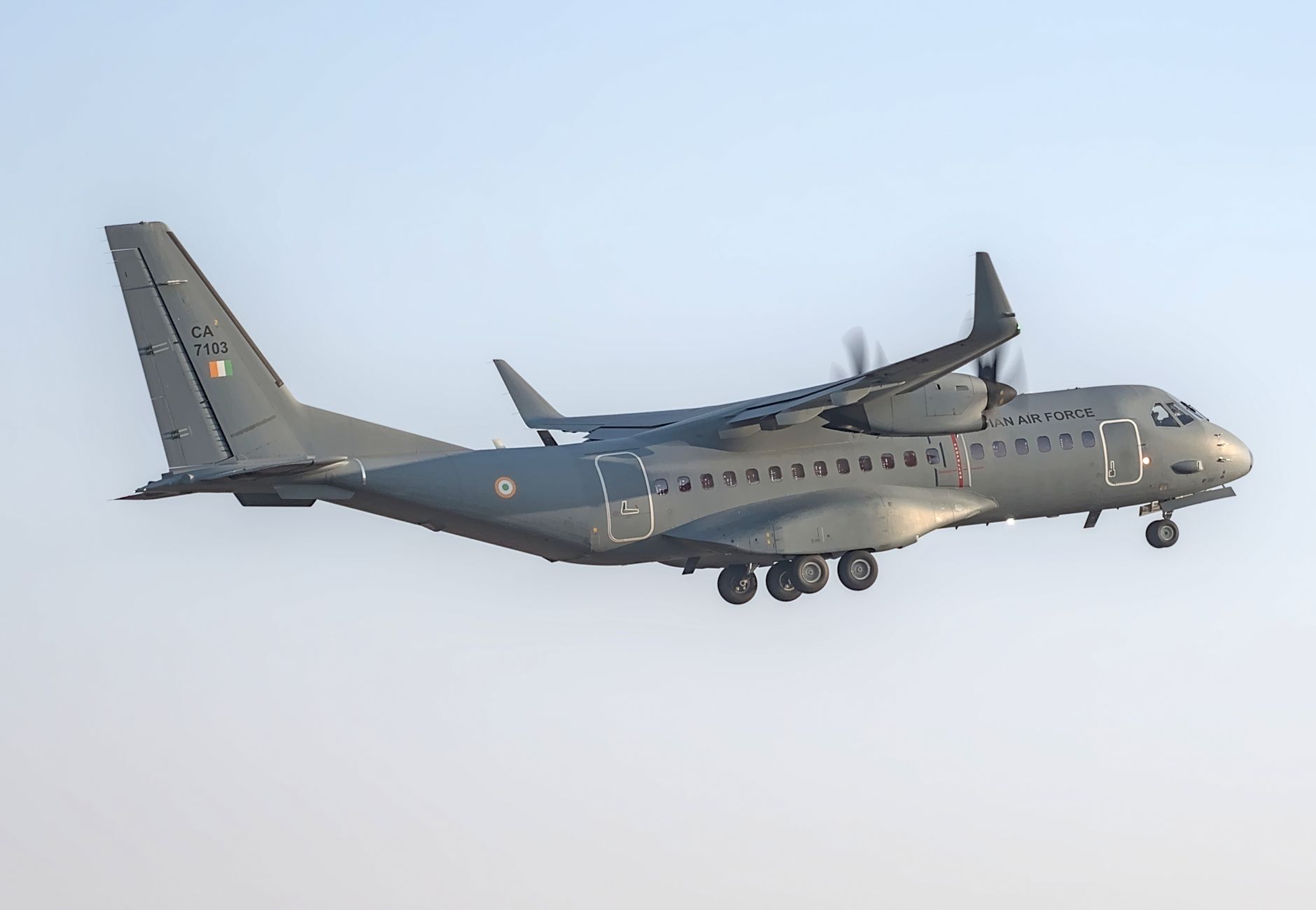 Photo by Aseem Borkar on Pexels.
That was 2023. Three years later, the program is a masterclass in how the Pentagon turns a relatively straightforward modernization decision into a procurement soap opera.
What the Wedgetail Actually Is
The E-7A is not some exotic experimental aircraft. Australia has been flying it since 2009. The UK Royal Air Force bought it. South Korea operates it. NATO is acquiring it. The plane uses a 737-700 airframe fitted with a Northrop Grumman multi-role electronically scanned array radar (MESA), which sits in a fixed fin-shaped radome on top of the fuselage instead of the classic rotating rotodome that made the AWACS look like a flying mushroom.
The MESA radar offers meaningful advantages: it scans electronically rather than mechanically, which means no moving parts to maintain, faster revisit rates, and simultaneous 360-degree coverage. The 737 airframe is cheaper to operate than the ancient 707-based E-3. Boeing has a mature production line. Spare parts exist. Allies use the same platform.
On paper, this is about as low-risk a procurement decision as the Air Force ever makes.
So What's the Holdup?
Several things, actually, and they stack on each other in the way only defense programs manage.
First, the Air Force initially awarded Boeing a sole-source contract to develop the U.S. variant in 2023, bypassing competitive bidding on the grounds that the Wedgetail was a proven platform requiring only modest modification. Modest is doing a lot of work in that sentence. The American version needs significant changes: different radios, different datalinks, different mission systems to plug into U.S. command networks. JTRS integration, Link 16, integration with JADC2 architecture. These aren't trivial bolt-ons.
Second, Boeing is Boeing right now. The company has well-documented production and quality problems across its commercial and defense lines. The KC-46 tanker (also a Boeing product) spent years with a defective refueling camera system. The T-7A Red Hawk trainer is behind schedule. Trusting Boeing to deliver a complex sensor-fusion aircraft on time and on budget requires a certain optimism the program office may not be entitled to.
Third, Congress has opinions. Several lawmakers have pushed back on retiring the E-3 fleet before the E-7A reaches initial operational capability. The AWACS may be old, but it works. Retiring it before its replacement is ready leaves a capability gap in airborne battle management that no one has a great answer for.
graph TD
    A[E-3 Sentry AWACS\n707 airframe, 1977] --> B{Retirement Decision\n2023}
    B --> C[E-7A Wedgetail\n737 airframe, MESA radar]
    C --> D(Mission System Integration)
    D --> E{IOC Target\nSlipping)
    E --> F[Capability Gap Risk]
    F --> G((Congress Objects))
The Gap Problem Is Real
The E-3 fleet has shrunk to roughly 24 aircraft, down from a peak of 34. Maintenance costs are brutal: the TF33 engines that power the E-3 are out of production, meaning the Air Force cannibalizes parts from retired airframes to keep the active fleet flying. Radar system upgrades were deferred for years because everyone knew the platform was on the way out. So the existing fleet is degraded, the new one isn't ready, and the overlap window is compressing.
Airborne early warning and battle management isn't a nice-to-have. In a high-end conflict against a peer adversary with advanced fighters and long-range missiles, the ability to see the entire air picture from altitude and vector your own fighters accordingly is how you win engagements. Losing that capacity, even temporarily, is a problem the Air Force would rather not explain to a Senate Armed Services Committee.
The Allies Are Fine, Though
Here's the detail that makes this extra awkward: the Royal Air Force declared initial operating capability on its Wedgetail in 2023. Australia has been doing it for 15 years. The aircraft works. The radar works. The basic concept works. The specific challenge is getting a U.S.-variant mission system integrated, tested, and certified while Boeing juggles its other production fires and the Air Force figures out exactly what it needs the plane to do inside a JADC2 ecosystem that is itself still being defined.
Replacing a 50-year-old airborne radar with a modern one shouldn't require a decade of institutional negotiation. Yet here we are, flying mushrooms while the paperwork catches up.
Get Defense & Donuts in your inbox
New posts delivered directly. No spam.
No spam. Unsubscribe anytime.