Why the Air Force's $80 Billion GBSD Nuclear Missile Program Can't Figure Out What to Call Itself
 K. Brennan
There is a missile in the American nuclear arsenal that has been in the ground since 1970. The Minuteman III. It was designed to last ten years. It has now lasted more than fifty, held together by upgrades, spare parts, and what defense officials charitably call "life extension programs" and what everyone else calls "hoping really hard."
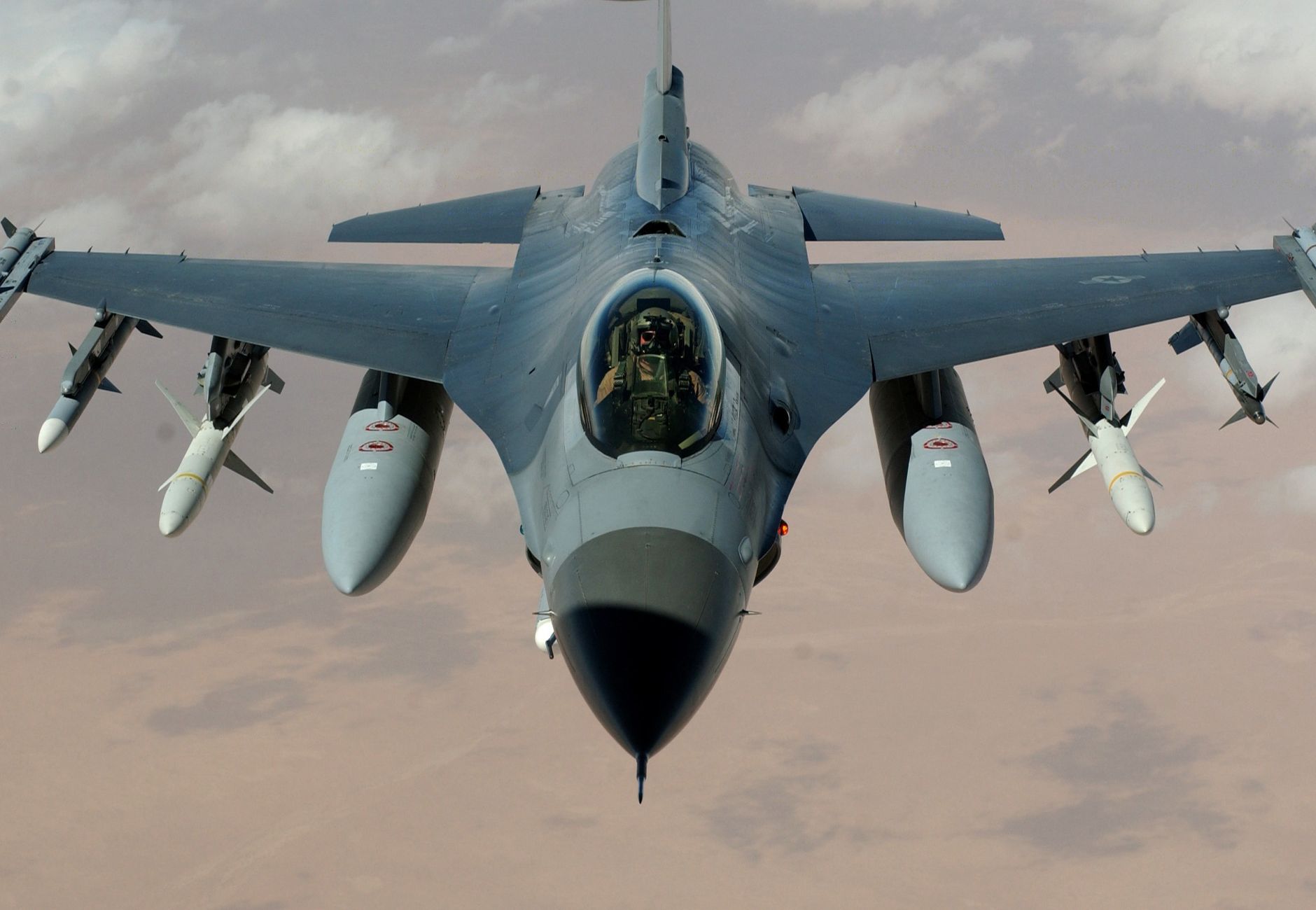 Photo by
 The replacement was supposed to fix all of that. The Ground Based Strategic Deterrent, or GBSD, was the Air Force's plan to retire the Minuteman III and field a modern, reliable, next-generation intercontinental ballistic missile. Northrop Grumman won the contract in 2020. Cost estimate: roughly $80 billion for 659 missiles. Timeline: initial deployment by 2029.
Then things got complicated.
First, the program got a new name. GBSD became the LGM-35A Sentinel in 2021. The Air Force said it honored the missile's role in standing watch over the country. Critics noted it also conveniently detached the program from a growing pile of bad press. Rebranding is a time-honored Pentagon tradition, right up there with schedule slippage and Nunn-McCurdy breaches.
Which brings us to the breach.
In January 2024, the Air Force confirmed that Sentinel had triggered a Nunn-McCurdy critical breach, meaning program costs had grown more than 25 percent above the original baseline. The new cost estimate landed around $141 billion. That is not a rounding error. That is a $61 billion surprise on a program that was already the most expensive nuclear weapons modernization effort in American history.
The reasons read like a procurement cautionary tale. Northrop Grumman had never built an ICBM before. Nobody really had, not since the 1970s. The institutional knowledge of how to do this at scale had largely retired, quite literally, along with the engineers who built the Minuteman. Site surveys of the missile fields in Wyoming, Montana, and North Dakota revealed that the underground infrastructure was in worse shape than anyone had formally acknowledged. Silo upgrades cost more. New command-and-control wiring cost more. Everything cost more.
When costs blow past the Nunn-McCurdy threshold, the law requires the Pentagon to either certify the program as essential to national security and continue it, or cancel it. Defense Secretary Lloyd Austin certified Sentinel in July 2024. His reasoning was straightforward: you cannot cancel the land-based leg of the nuclear triad and still claim to operate a triad. Deterrence is not a buffet.
So the program survived. The schedule did not.
graph TD
    A[Minuteman III, 1970] --> B[GBSD Contract Award, 2020]
    B --> C[Renamed LGM-35A Sentinel, 2021]
    C --> D{Nunn-McCurdy Breach, 2024}
    D --> E[Certification: Mission Essential]
    D --> F[Cost Revised to $141B]
    E --> G[Revised IOC Target: 2030s]
    F --> G
Initial operating capability, originally slated for 2029, has slipped into the early 2030s. The Air Force is reluctant to pin down an exact year, which tells you something. When a program office stops quoting specific dates, they have either lost confidence in the schedule or they have been told to stop creating targets they will have to apologize for later.
Meanwhile, the Minuteman III keeps aging. Some of the components being used to maintain it are no longer in production. The Air Force has been cannibalizing decommissioned missiles for parts. This works until it doesn't, and the margin for "until it doesn't" is getting thinner every year.
The strategic argument for keeping ICBMs is real. The land-based missiles serve as a "sponge," in nuclear parlance: any adversary attempting a disarming first strike would have to target all 450 silos spread across five states, expending a massive portion of their own arsenal before getting to cities or other targets. Sea-based missiles on submarines carry the survivable second-strike capability. Bombers provide the visible, recall-able signal. Each leg does something different.
But the political and fiscal argument is getting messy. One hundred and forty-one billion dollars, on a program that won't deploy until the 2030s, competing for budget space with carrier strike groups, fighter programs, hypersonics research, and a Space Force that keeps discovering it needs more satellites. Every dollar going to Sentinel is a dollar not going somewhere else.
Northrop Grumman has been working through the technical challenges. The company is further into detailed design than the program's critics sometimes acknowledge. But further along and on-schedule are different things, and the Air Force has not yet demonstrated it can hold the line on a revised cost estimate that is already 75 percent higher than what Congress originally approved.
Somewhere in Montana, a fifty-six-year-old missile is sitting in a silo, waiting to be replaced by a program that can't agree on a delivery date. The Minuteman III has outlasted the Soviet Union, four decades of defense budgets, and apparently the original GBSD cost estimate by a comfortable margin.
Patience, apparently, is the one capability the old missile still has in abundance.
Get Defense & Donuts in your inbox
New posts delivered directly. No spam.
No spam. Unsubscribe anytime.