Why the Army's $1 Billion Distributed Standoff Electronic Warfare System Can't Figure Out What to Jam
 K. Brennan
Electronic warfare used to be simple. You find the enemy's radio. You jam it. Soldiers stop dying from the IED that radio was about to detonate. Simple.
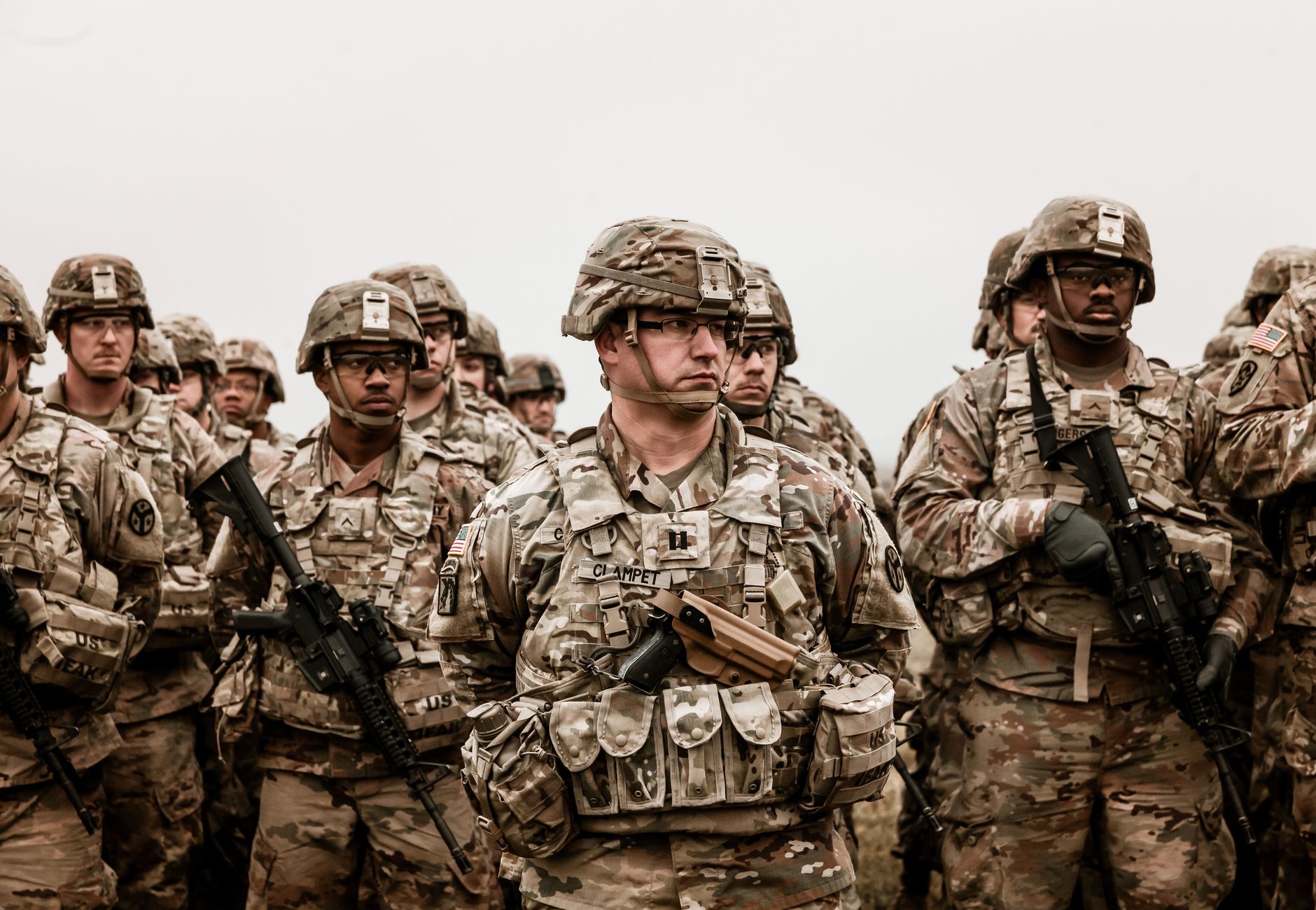 Photo by Art Guzman on Pexels.
Somewhat less simple: building a modern electronic warfare system capable of operating against a near-peer adversary with layered, frequency-hopping, encrypted communications across the electromagnetic spectrum. And that, in a nutshell, is where the Army finds itself with the Terrestrial Layer System, or TLS.
TLS is supposed to be the Army's answer to a genuine problem. Russia's electronic warfare capabilities humiliated Ukrainian forces in the early months of the war, spoofing GPS signals, intercepting drone feeds, and disrupting command communications with equipment that had been fielded years earlier. The Army watched all of that unfold and accelerated its own EW modernization effort. TLS would combine signals intelligence collection, electronic attack, and cyber capabilities into a single vehicle-mounted system. One platform. Multi-mission. Scalable across echelons.
Sounds great. The execution has been messier.
Boeing and Raytheon are the primary contractors splitting work on different TLS variants. The system is designed to operate at the brigade and battalion levels, which means it needs to be small enough to keep pace with maneuver units while still housing enough processing power to make sense of a contested electromagnetic environment in near-real time. That combination of requirements has proven difficult to satisfy simultaneously.
As of late 2024, TLS had completed several developmental test phases but continued to struggle with what Army evaluators described as "multi-function integration challenges." Translated from acquisition-speak: the signals intelligence piece and the electronic attack piece don't always cooperate. A system that's actively collecting signals has a harder time jamming without exposing its own position. Solving that tradeoff requires software-defined radio architectures sophisticated enough to switch roles quickly, and the software keeps slipping schedules.
There's a deeper doctrinal confusion underneath the technical problems.
The Army can't fully agree on what TLS should prioritize in a fight. Signals intelligence officers want dwell time on targets: sit, listen, build a picture of the enemy's order of battle. Electronic attack advocates want speed: detect a threat, suppress it, move on. Cyber operators want persistent access to adversary networks, which sometimes means you specifically do not jam a signal because you're riding it somewhere useful. Each of those priorities is legitimate. They also pull the system in different directions.
This isn't a new tension in electronic warfare. The NSA and military EW communities have been arguing about exploit-versus-disrupt tradeoffs for decades. What's new is trying to resolve that argument inside a single battalion-level platform that also has to survive artillery and drive on dirt roads.
The budget picture adds another layer of pressure. TLS has consumed roughly $1 billion in development funding since the program formally kicked off in 2019. Congress has asked pointed questions about fielding timelines. The Army's original target was to have initial TLS capability fielded to Brigade Combat Teams by fiscal year 2026. That date has quietly slid. Current estimates point toward late 2027 for limited fielding, with full-rate production dependent on test outcomes that haven't happened yet.
Meanwhile, the electromagnetic threat environment keeps getting more complicated. Chinese and Russian military doctrine has moved toward software-defined EW systems that can be rapidly updated with new waveform libraries, essentially changing what they jam and how they jam it faster than hardware-based systems can adapt. TLS was designed with software-defined radio as a core feature specifically to stay adaptive. Whether the update cycles in practice will actually match the speed of adversary innovation remains an open question.
There's a real irony in the timeline here. Ukraine's experience demonstrated that cheap, commercially derived EW systems fielded quickly can be devastatingly effective. Ukraine has been using modified commercial signal analyzers and open-source software to defeat drone swarms that cost far more than the countermeasures. The Army looked at that lesson and concluded it needed a sophisticated, integrated, multi-mission platform costing a billion dollars.
That conclusion may be correct. Brigade-level operations against a near-peer adversary are categorically different from the ad hoc drone jamming happening in eastern Ukraine. The complexity is real and the requirements are legitimate. But the gap between a good requirements document and a working system that soldiers can actually operate under fire remains the persistent problem in Army modernization, and TLS is currently sitting in the middle of that gap.
If it comes together, TLS could genuinely change how the Army fights in a contested electromagnetic environment. If the software integration issues don't resolve, or if the doctrinal disagreements keep producing requirements churn, the Army will have spent a billion dollars building a very expensive argument about what electronic warfare is actually for.
Get Defense & Donuts in your inbox
New posts delivered directly. No spam.
No spam. Unsubscribe anytime.