Why the Navy's $32 Billion Constellation-Class Frigate Can't Stop Changing What It Wants to Be
 K. Brennan
The Navy wanted a cheap, capable, no-drama frigate. A workhorse. Something to fill out carrier strike groups without costing as much as a destroyer. Six years into the program, the FFG-62 Constellation class has managed to be none of those things.
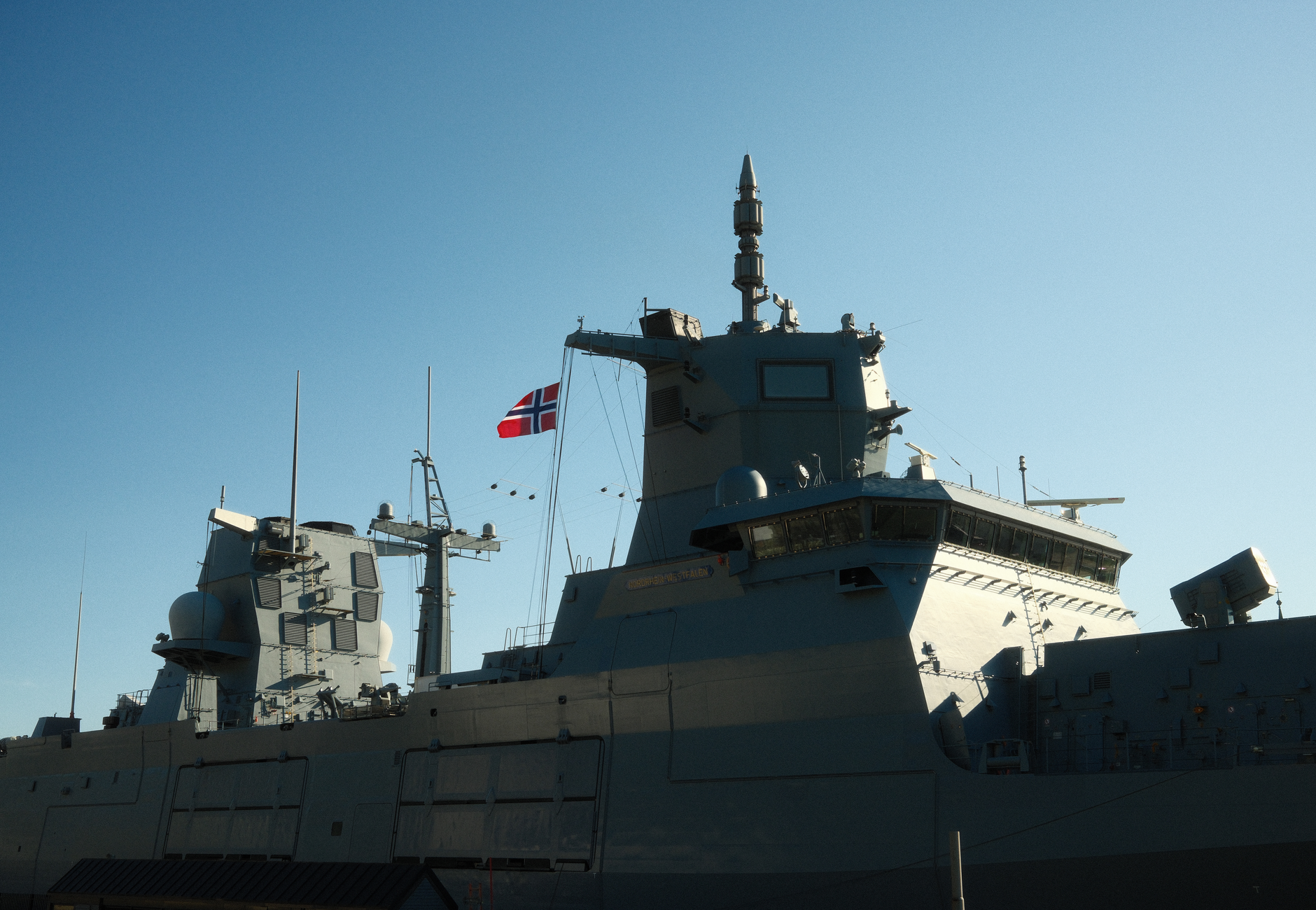 Photo by Dua'a Al-Amad on Pexels.
As of 2025, the lead ship, USS Constellation, is at least four years behind its original delivery schedule. The program's total cost has ballooned toward $32 billion for the full 20-ship buy, up from earlier estimates that made the whole thing sound like a Pentagon bargain. The first hull alone now runs over $1.3 billion. For context, the Navy originally sold Congress on this program partly because it would cost less than a Burke-class destroyer. A Burke costs around $2.2 billion. So the frigate is not cheap. It is also not finished.
How does this happen with a ship that was supposed to be simple?
The short answer: the Navy kept changing the design after the contract was already signed. The longer answer involves a foreign baseline that turned out to be less useful than advertised, a shipyard that hadn't built a combatant in decades, and a requirements process that treats "good enough" as a starting point rather than a goal.
The Constellation class is derived from the FREMM frigate, a Franco-Italian design already in service with several NATO navies. That sounds great on paper. A mature, proven hull with real-world operational history should reduce risk. Except the Navy looked at the FREMM and immediately started swapping out, adding, and redesigning major systems to meet American requirements. New radar. Different weapons. Resized hull sections. Upgraded combat management systems. At a certain point, the "derivative design" label starts doing a lot of heavy lifting.
By 2022, the Government Accountability Office was already flagging that the ship's design wasn't stable, meaning shipbuilders were still waiting on final drawings for sections they were supposed to be building. You cannot pour steel to a blueprint that hasn't been finished yet. Construction at Fincantieri Marinette Marine in Wisconsin slowed accordingly.
Fincantieri is also worth examining here. The Italian parent company builds frigates regularly. The Wisconsin yard had not built a major surface combatant since the 1970s. Workforce gaps, tooling limitations, and supply chain rebuilding all added friction to a program that had no margin for friction.
graph TD
    A[FREMM Baseline Design] --> B(Navy Requirement Changes)
    B --> C{Design Instability}
    C --> D[Delayed Drawings]
    C --> E[Scope Growth]
    D --> F[Construction Slowdown]
    E --> F
    F --> G((Schedule Slip + Cost Growth))
The Navy's own leadership has acknowledged the mess. Former Chief of Naval Operations Admiral Mike Gilday flagged design stability as the program's core problem before he retired. His successor inherited the same headache. Congress has periodically threatened to cut ship counts or slow funding, which is its standard move when a program starts embarrassing people during budget season.
What makes this particularly frustrating is that the whole rationale for the frigate was numbers. The Navy's battle force has been shrinking for years. The service needs more hulls, not fewer. A frigate was supposed to provide capable presence at lower cost than a destroyer, letting the fleet be in more places at once. Every year the Constellation slips is a year that presence gap stays open.
The frigate also carries real operational expectations. Anti-submarine warfare. Surface strike. Convoy escort. These aren't glamorous missions but they matter enormously in a Pacific conflict scenario where the distances are vast and logistics ships need protection. Delaying the ship doesn't make those missions go away.
There's a version of this story where everything works out. The design stabilizes, Fincantieri's workforce gets up to speed, and the later hulls in the class benefit from lessons learned on the first two or three. That's how shipbuilding programs historically work: painful upfront, more efficient later. The Burke class had its own rough early years before becoming the backbone of the surface fleet.
But that optimistic arc requires the Navy to stop changing what it wants. The service has a well-documented habit of treating a signed contract as the beginning of a conversation rather than the end of one. Every new requirement added mid-construction costs roughly three to five times what it would have cost during the design phase. The frigate program has paid that tax repeatedly.
A workhorse that's still in the barn four years after it was supposed to be running isn't saving anyone anything.
Get Defense & Donuts in your inbox
New posts delivered directly. No spam.
No spam. Unsubscribe anytime.