Why the Pentagon's Counter-Drone Plan Has 50 Different Ways to Shoot Down a $500 Quadcopter
 K. Brennan
Walk into any defense trade show this year and you'll trip over a counter-drone booth before you finish your free tote bag. Lasers, microwaves, nets fired from shotguns, jamming guns that look like Nerf blasters, interceptor drones that chase other drones like a Looney Tunes bit. The Pentagon currently has somewhere north of 50 different counter-UAS programs scattered across the services, and almost none of them talk to each other.
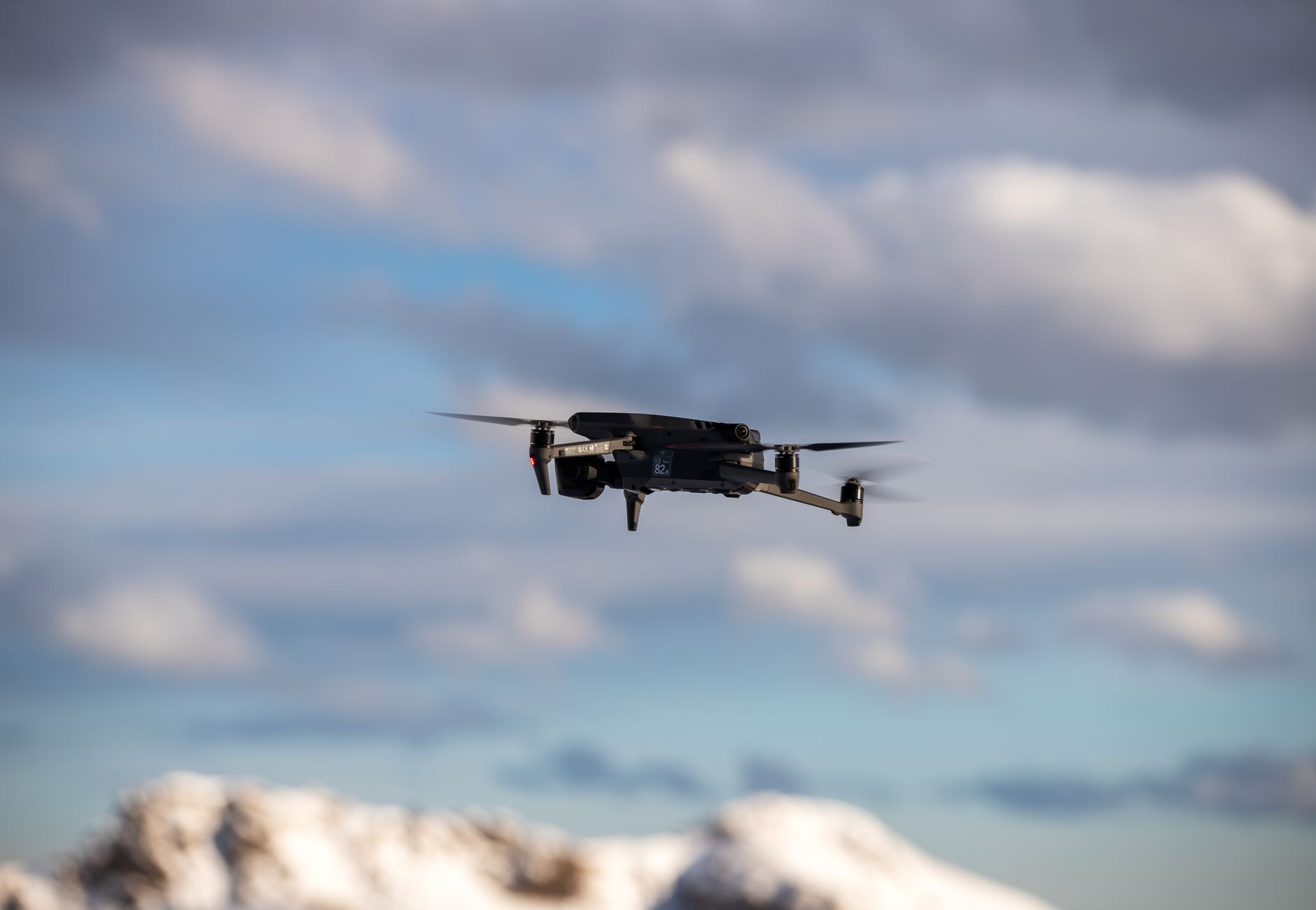 Photo by Alan Kabeš on Pexels.
This isn't a hypothetical problem anymore. Ukraine has shown that a drone costing less than a decent mountain bike can knock out a tank worth millions. Houthi attacks in the Red Sea have forced Navy destroyers to burn through Standard Missiles that cost more than a house to shoot down drones that cost less than a Peloton. The math is embarrassing enough that even Congress noticed, which is saying something.
So why hasn't the Pentagon just picked one good system and scaled it? Because the drone threat isn't one threat. A $500 DJI knockoff flying recon over a forward base is a different problem than a swarm of 20 explosive-laden quadcopters, which is a different problem again from a Shahed-style cruise missile drone lumbering in at 100 knots. Each of those wants a different answer: jamming works great against the cheap recon drone, does nothing against a GPS-denied swarm running on inertial guidance, and lasers love the slow cruise missile but struggle in rain or dust.
The result is that every service has built its own pet solution. The Army has the Dynamic Attack Prevention Platform and a dozen vehicle-mounted systems. The Marines have MADIS. The Air Force is testing high-powered microwave weapons that can supposedly fry a swarm's electronics in one pass, assuming the swarm cooperates by flying in a tidy line. None of these systems share a common command interface, which means a base defending against drones might need three different operators watching three different screens, each trained on a different vendor's software.
graph TD
    A[Incoming Drone Threat] --> B{What Kind?}
    B --> C[Cheap Recon Quad]
    B --> D[Explosive Swarm]
    B --> E[Cruise Missile Drone]
    C --> F[Jamming / RF Takeover]
    D --> G[Microwave or Kinetic Interceptor]
    E --> H[Laser or Traditional SAM]
    F --> I[No Shared Command Picture]
    G --> I
    H --> I
The Joint Counter-small Unmanned Aircraft Systems Office, JCO for short, was supposed to fix this. Stand up one office, pick a handful of systems, standardize the software, stop every program manager from reinventing the interceptor. Instead the JCO has mostly become a clearinghouse that approves dozens of systems rather than narrowing the field, because every service insists its mission set is special. Spoiler: it mostly isn't.
Meanwhile the actual threat keeps getting cheaper and more capable at the same pace. First-person-view drones with AI-assisted terminal guidance are already showing up on battlefields, meaning the window for jamming your way out of trouble is shrinking fast. A drone that doesn't need a GPS signal or a remote operator to find its target doesn't care how good your spectrum warfare toolkit is.
There's a real argument that the fix here isn't more exquisite hardware at all, it's mass. Cheap kinetic interceptors, built in the tens of thousands, that can be thrown at swarms without anyone sweating the unit cost. The Army's own experiments with low-cost interceptor rounds point that direction, but procurement culture still gravitates toward the expensive, sophisticated single system that promises to solve everything.
Until the Pentagon picks a lane, bases overseas will keep running layered defenses stitched together from whatever vendor got through the door first. It works, mostly, until the day a $500 drone finds the one gap nobody mapped. Given how this story usually goes, that day isn't hypothetical either.
Get Defense & Donuts in your inbox
New posts delivered directly. No spam.
No spam. Unsubscribe anytime.